The Carapace
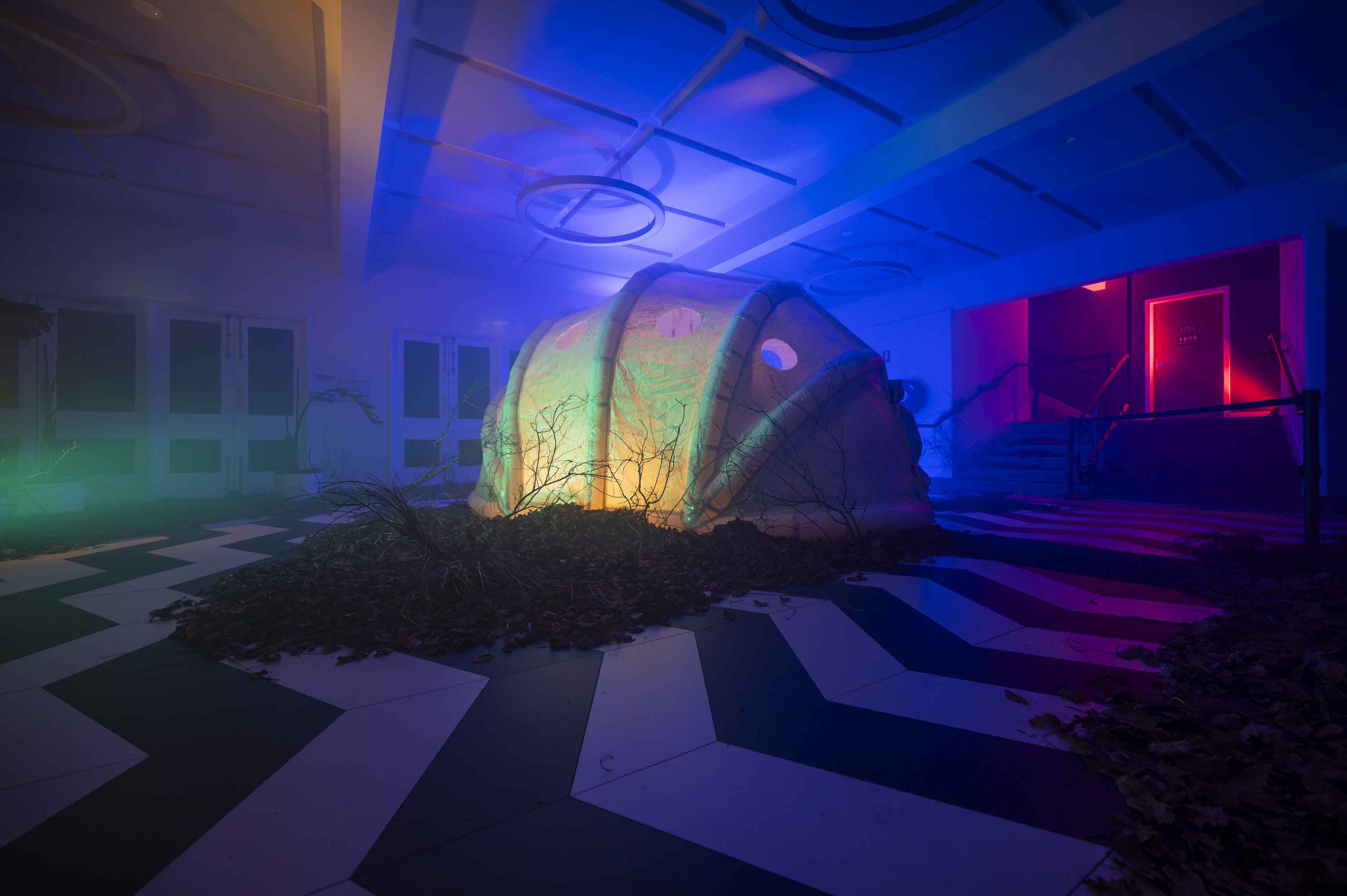
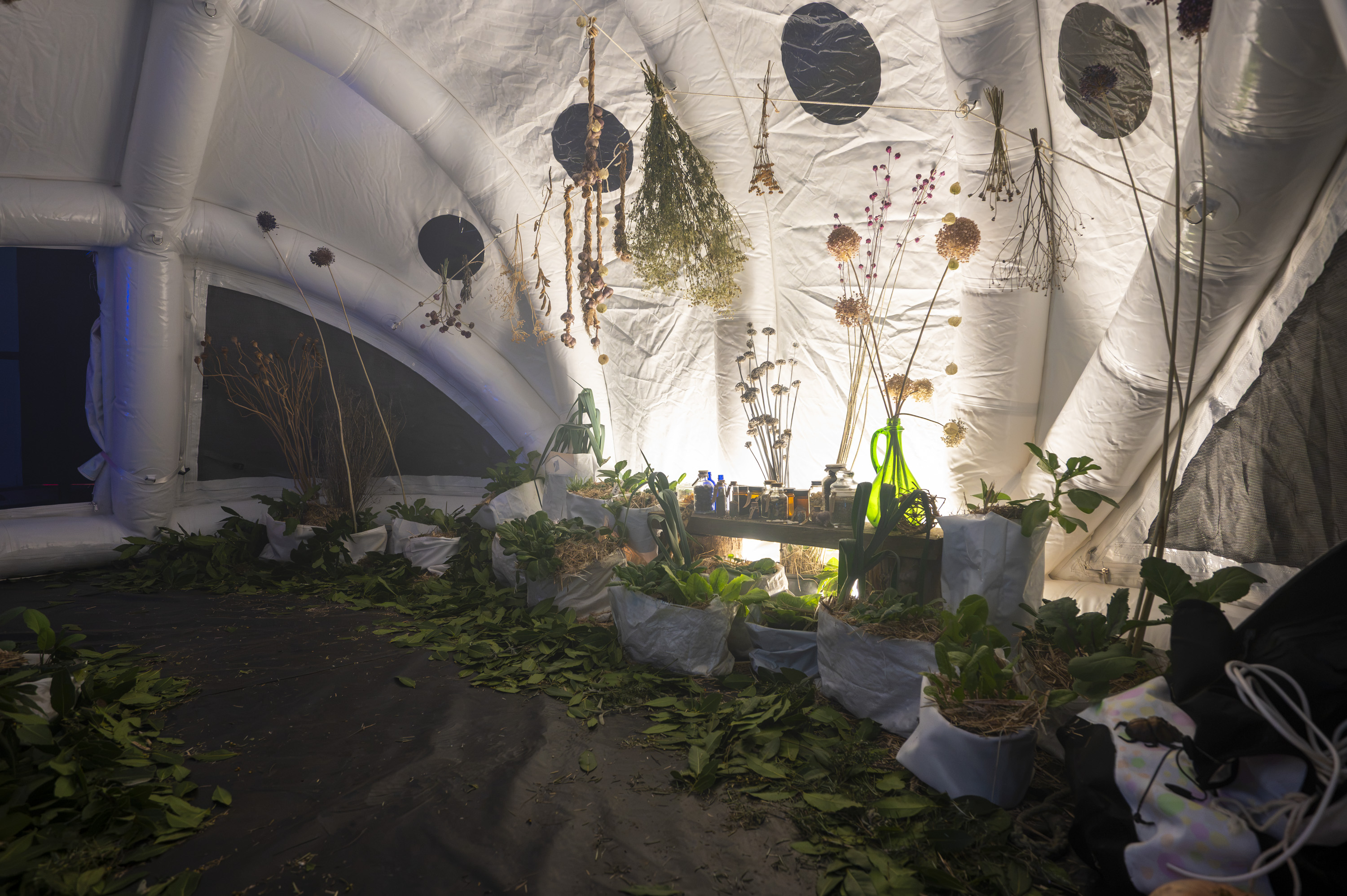
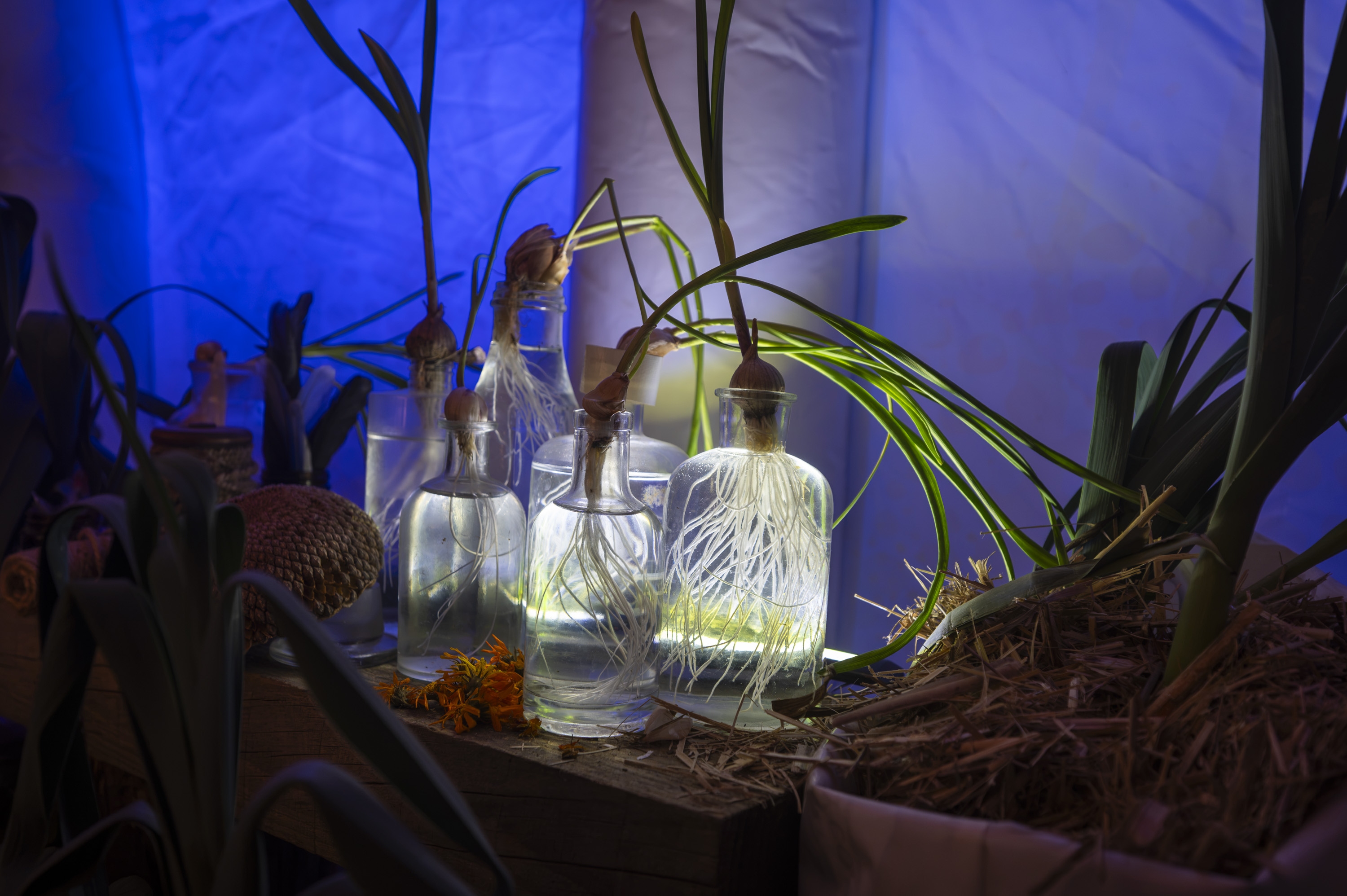
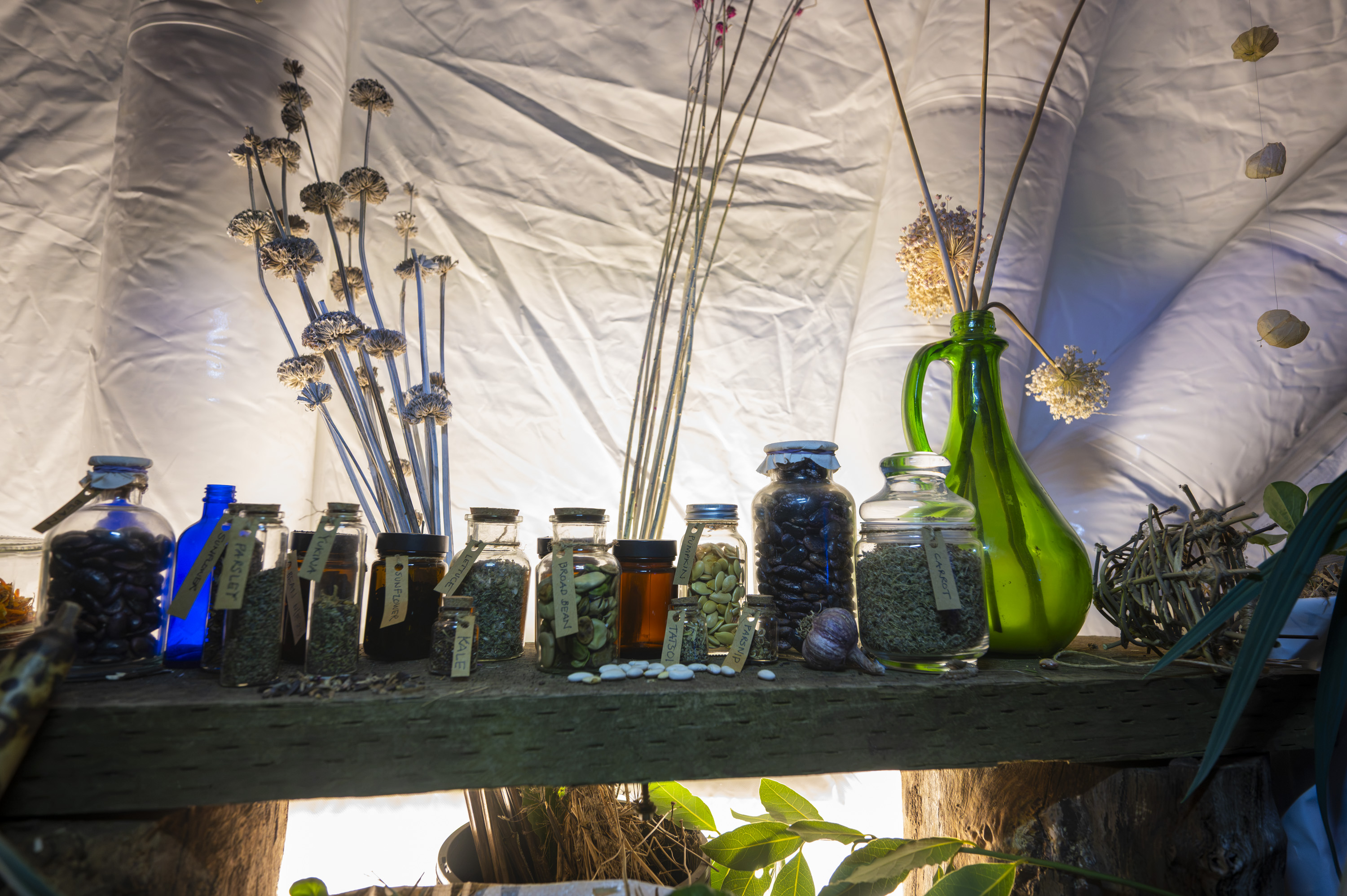
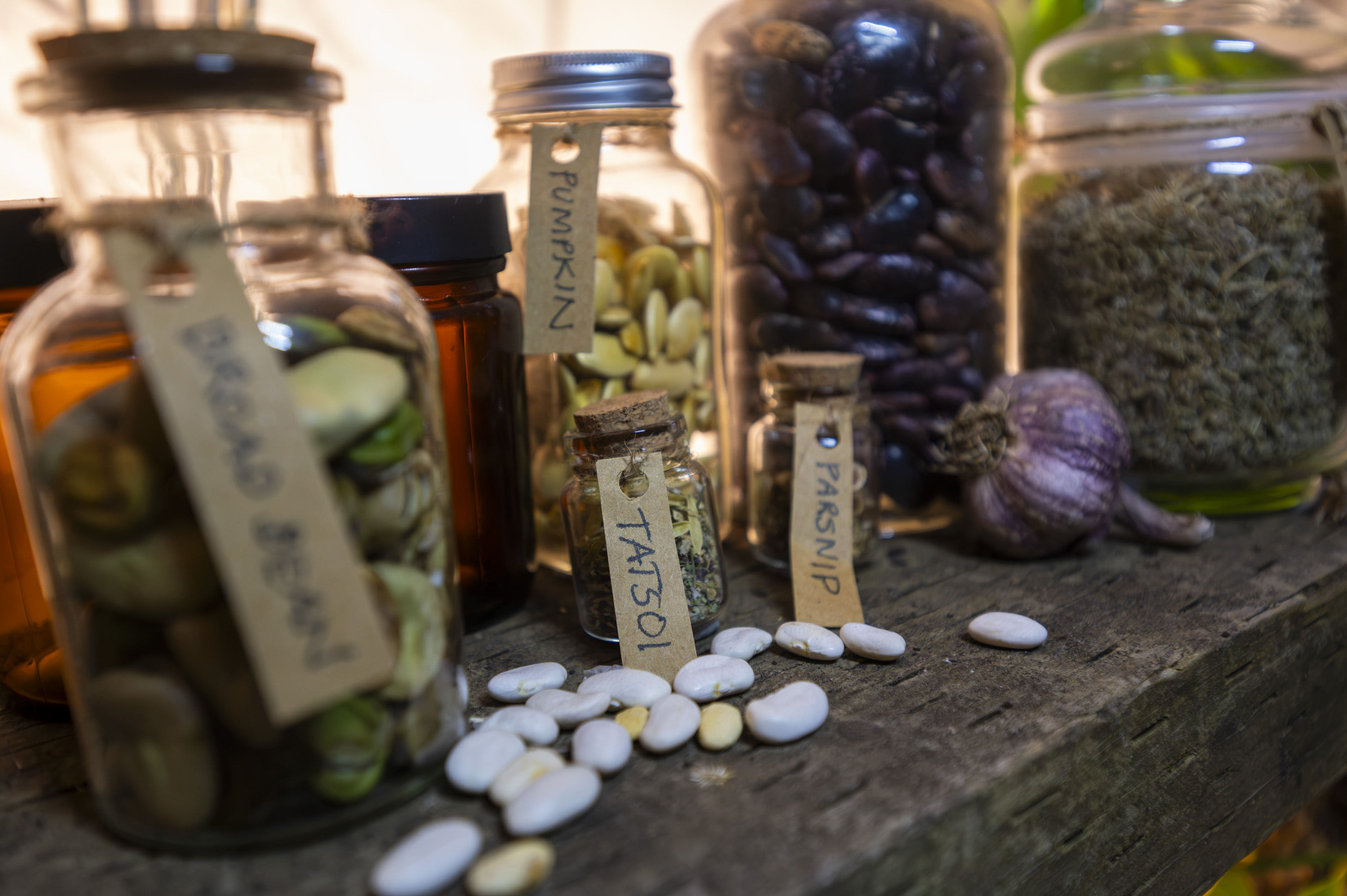
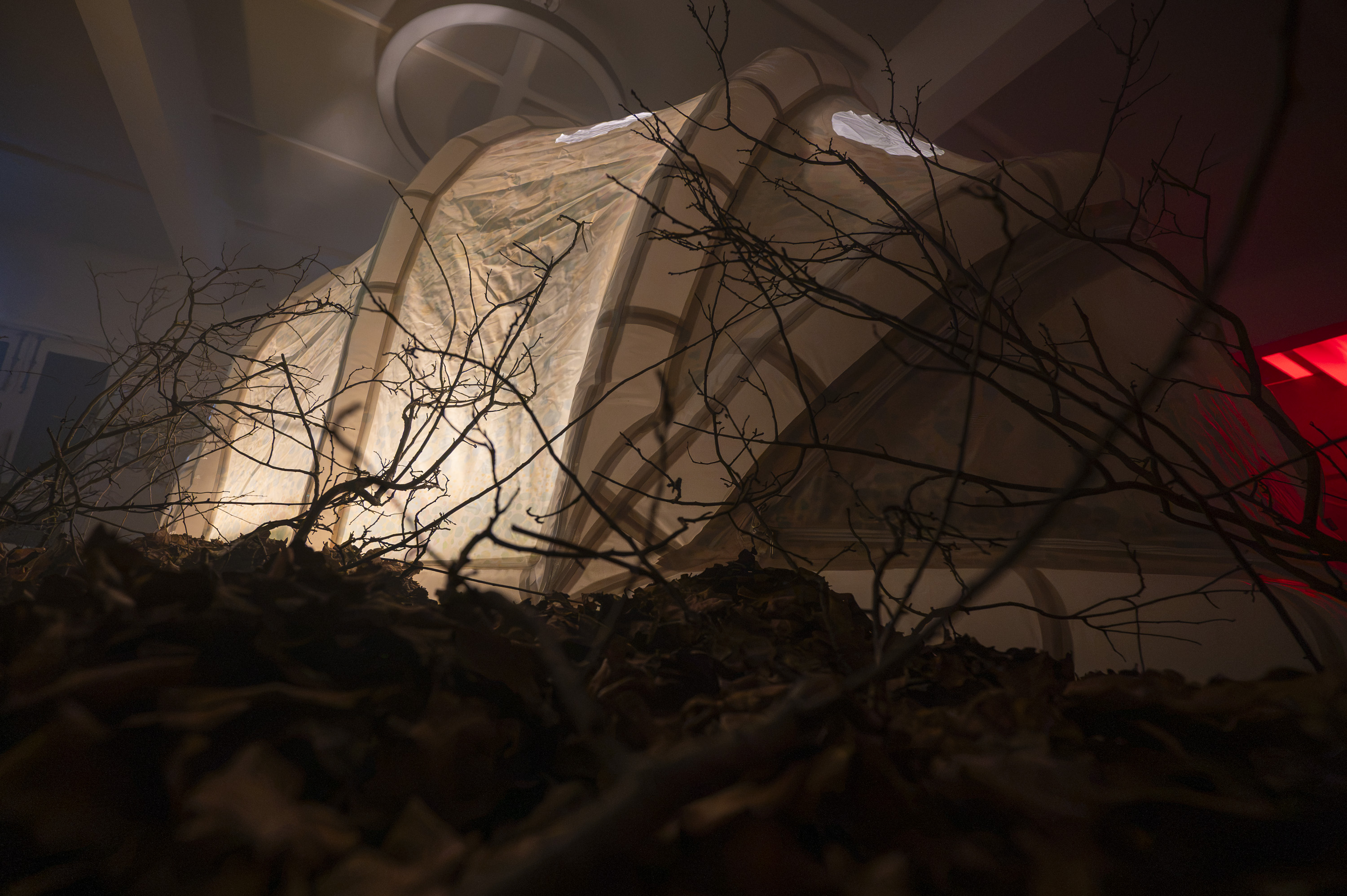
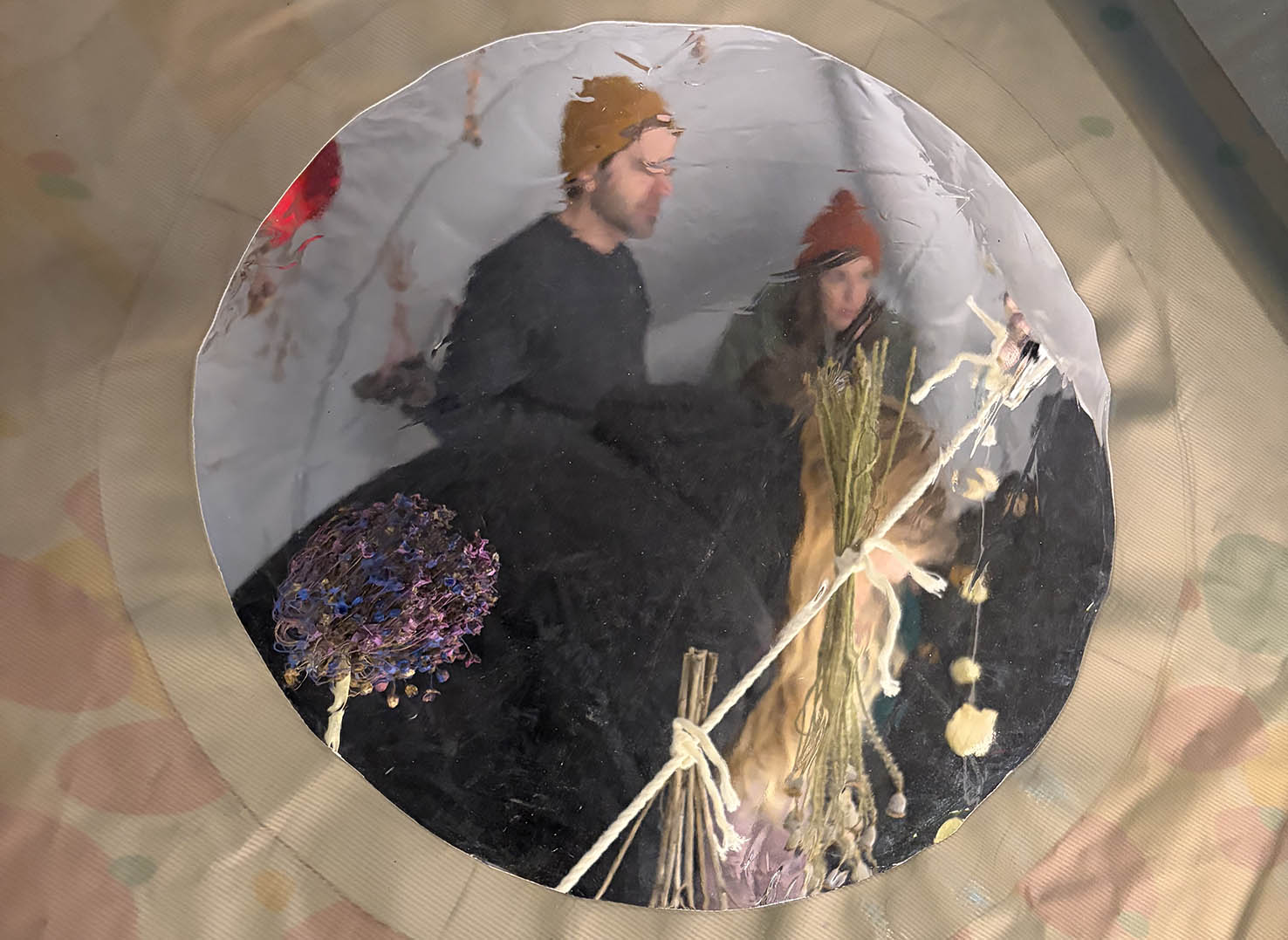
The Carapace is a portable architectural solution for speculative future needs. This inflatable bio-pack functions as a mobile cultivation device, combining shelter and survival garden. Stewarding edible biodiversity, it celebrates essential practices of seed saving, soil building, and food growing, proposing resilience through ecological knowledge, cultivation, and regeneration.
Curator David Cross put together a show that activated the nooks and crannies of the grand Civic Hall in Ballarat. Six artists including myself developed an inflatable artwork that occupied a different space within the building.
HIDDEN was a 3 day ticketed event open to the public in mid July 2026. An initiative of The City of Ballarat under Anindita Banerjee

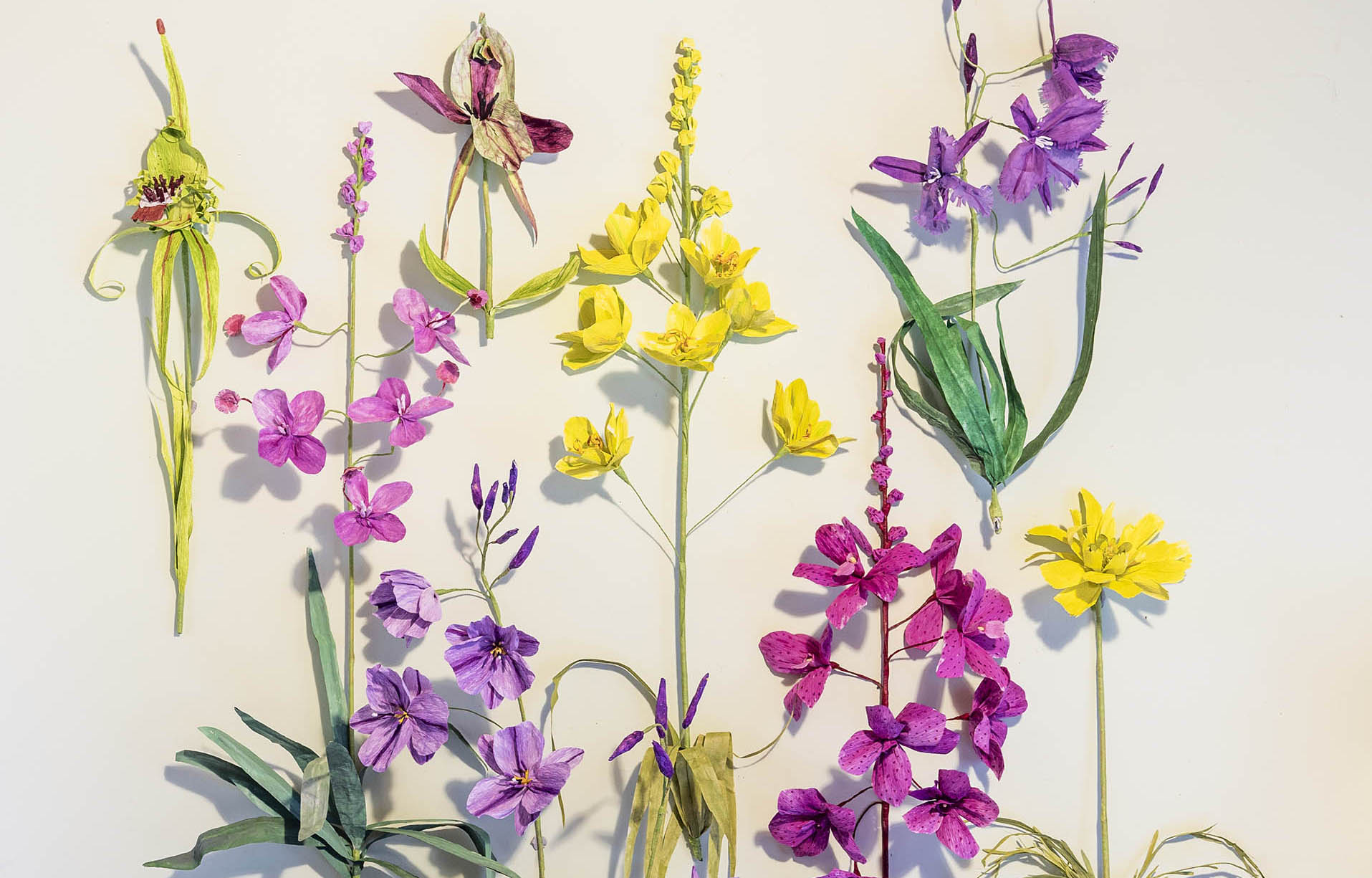
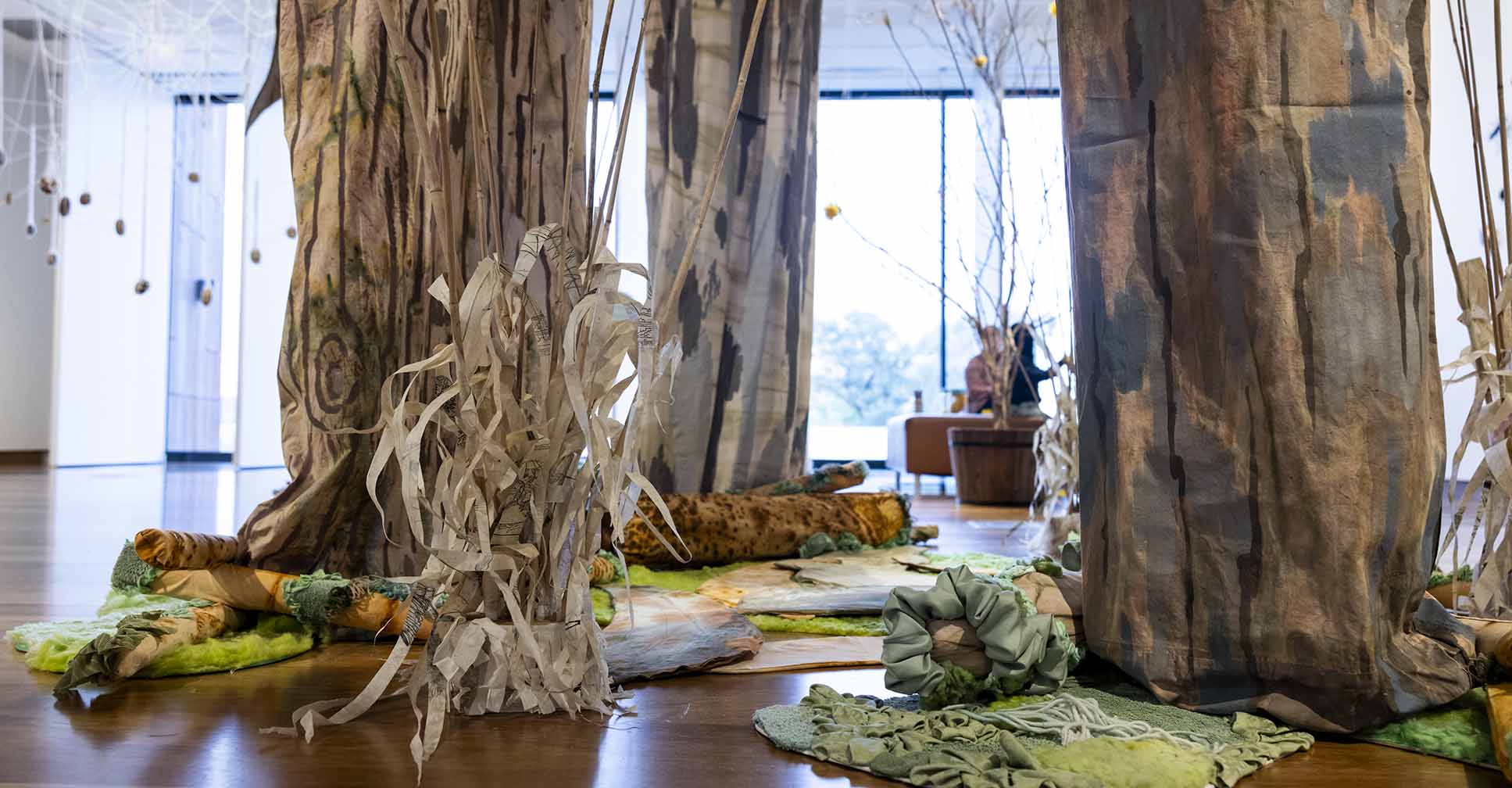
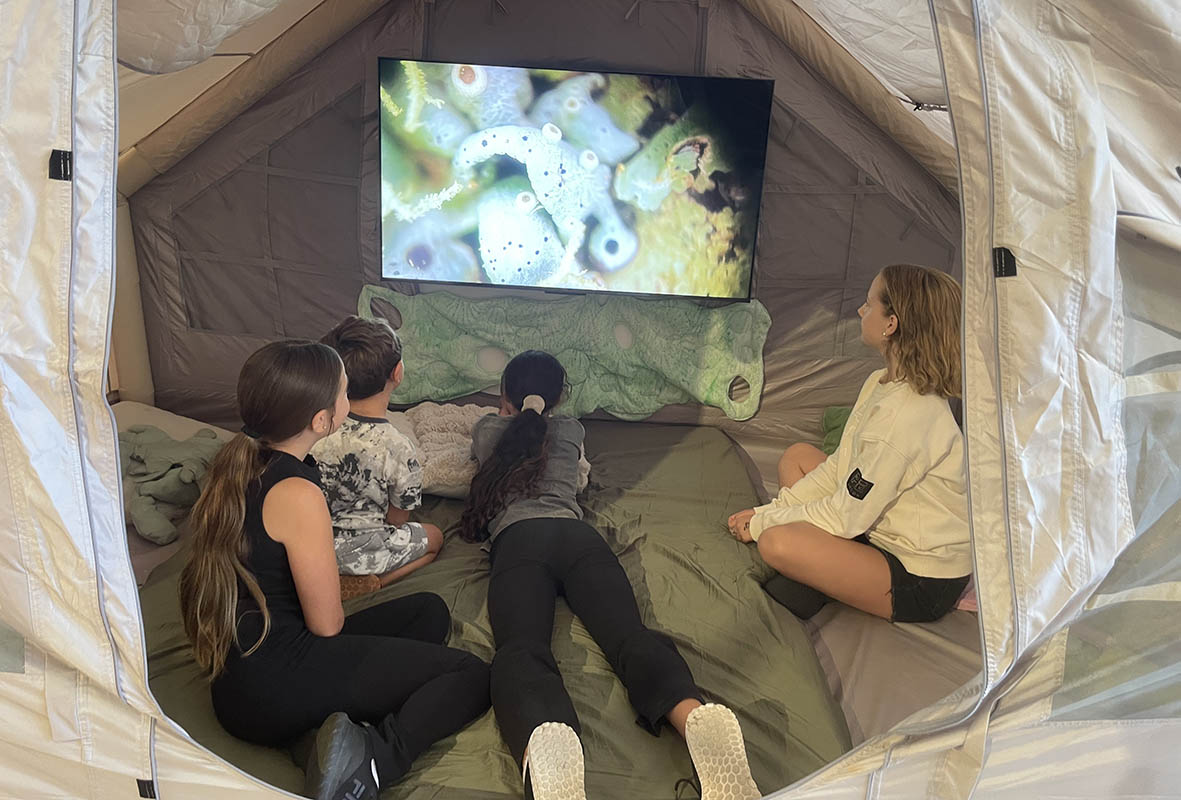
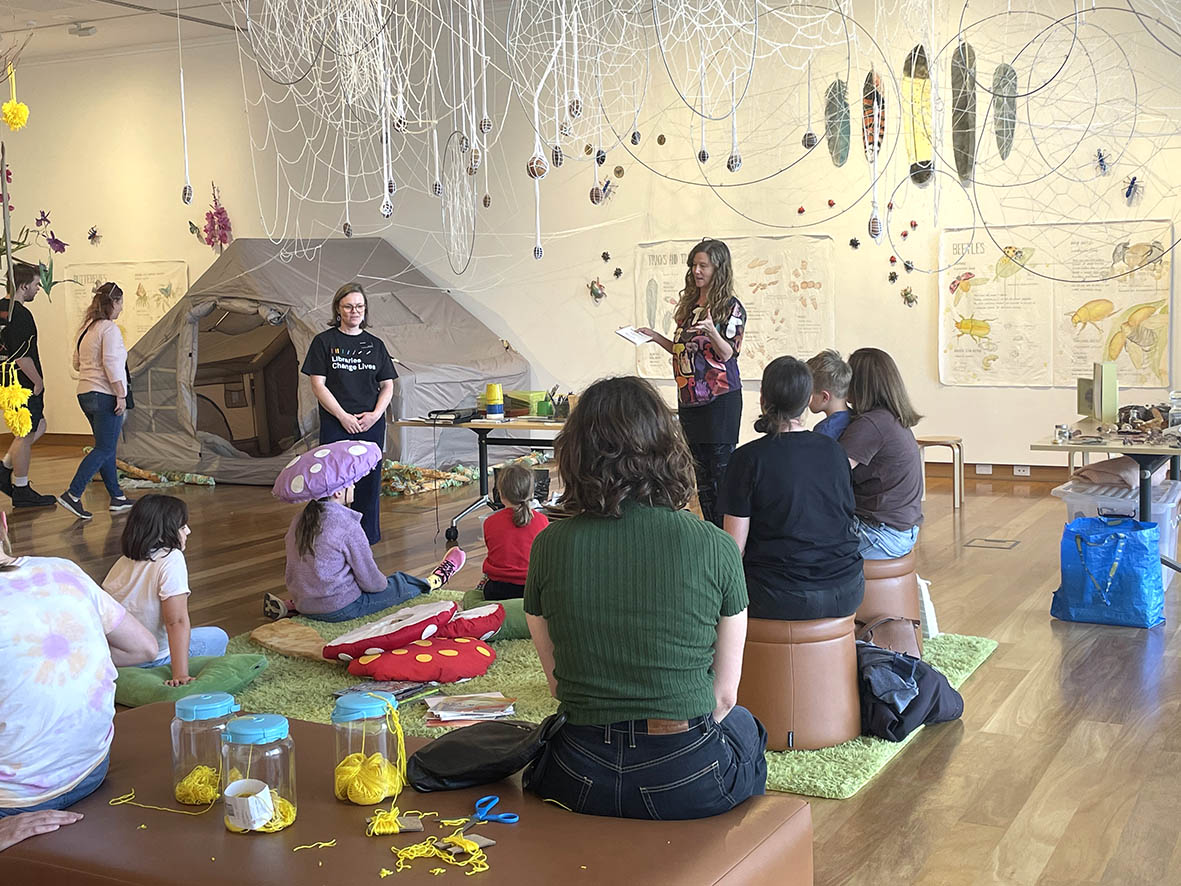
Understory
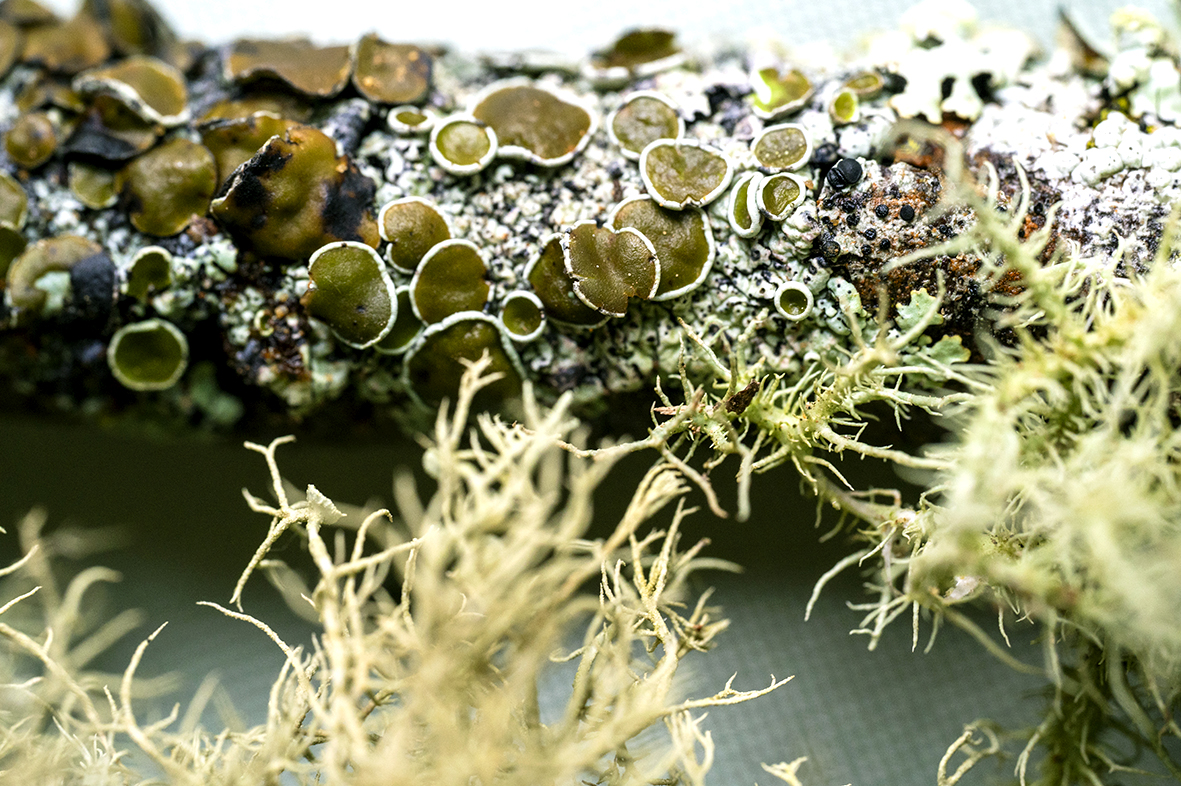
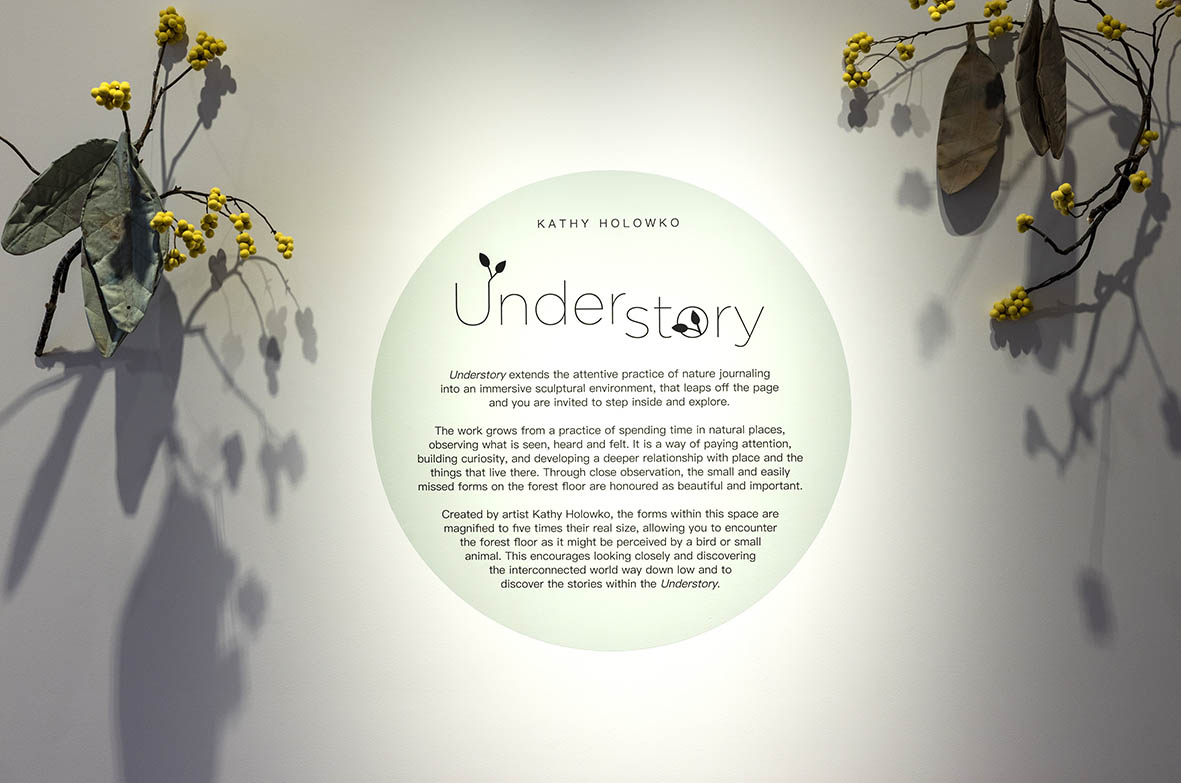
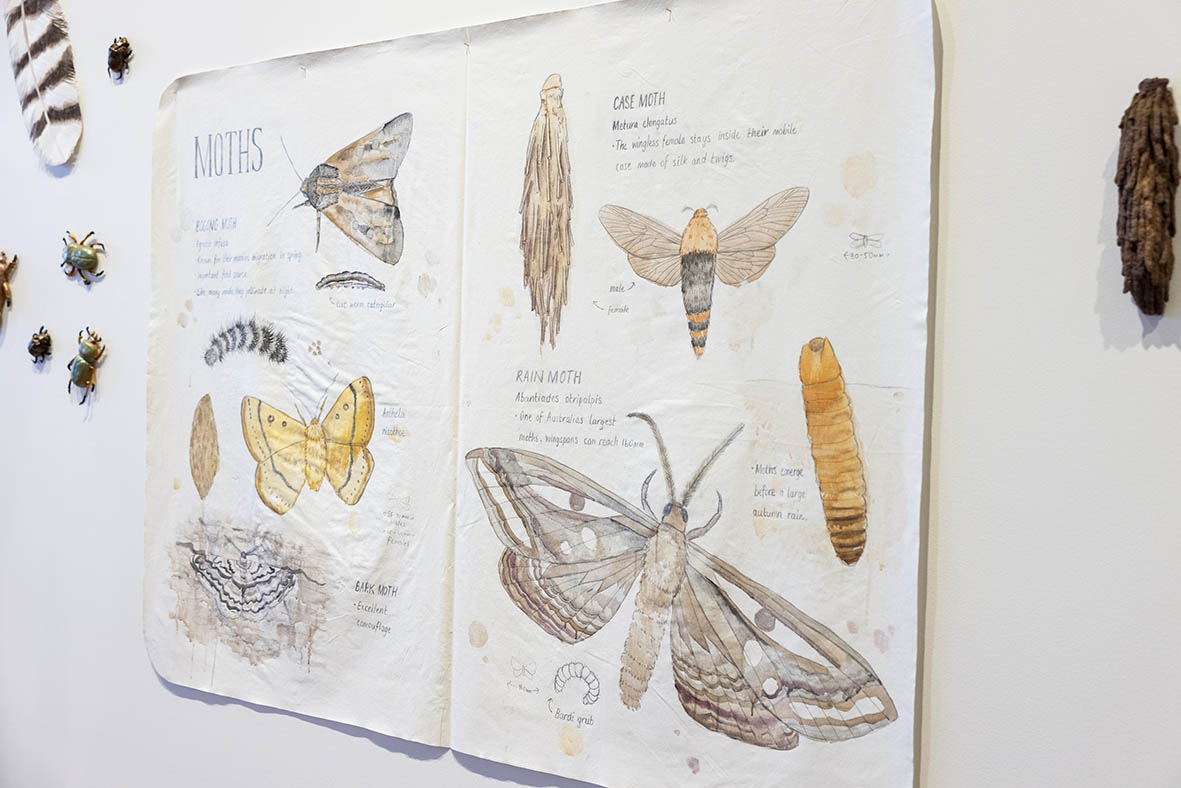
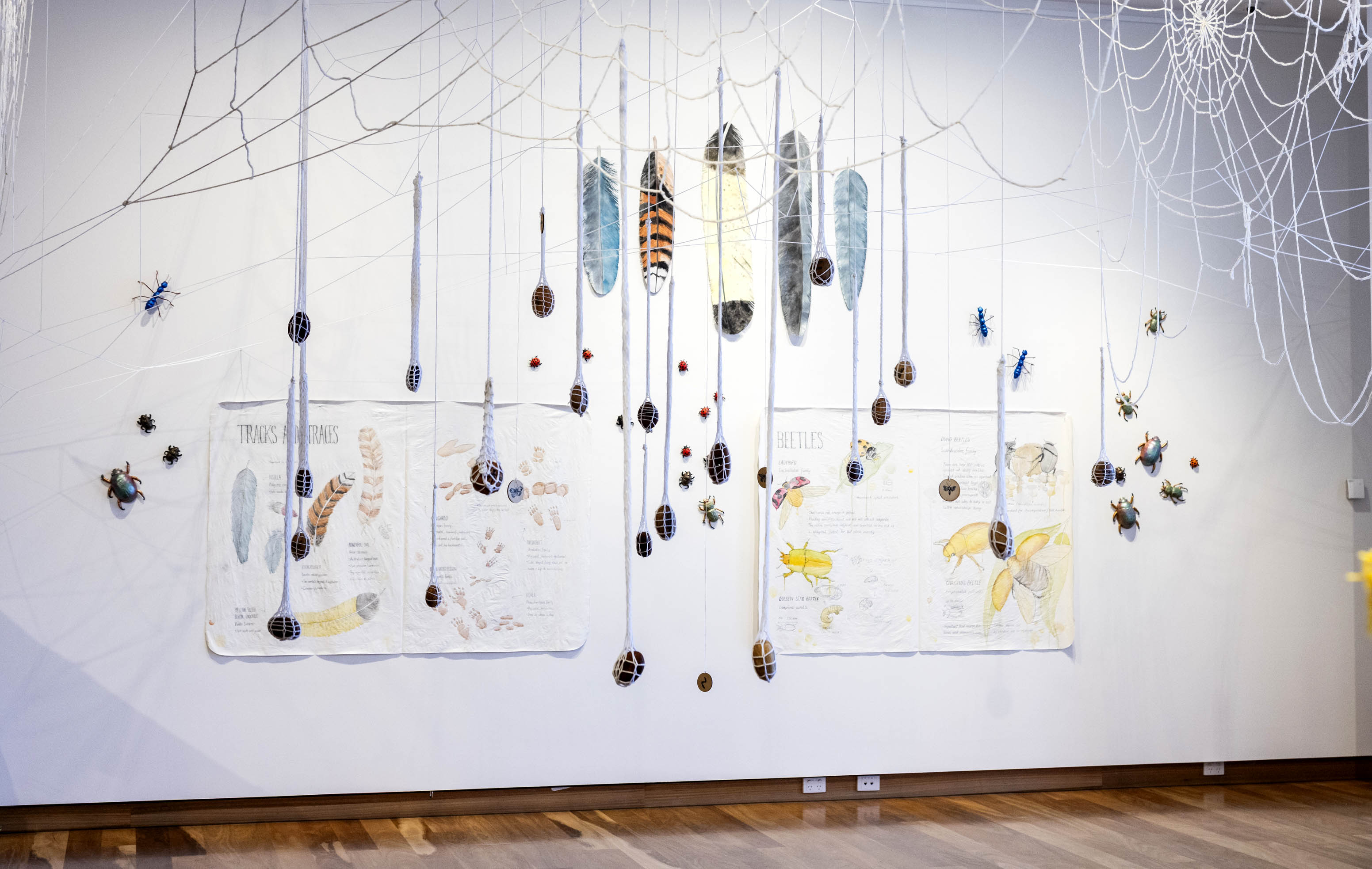
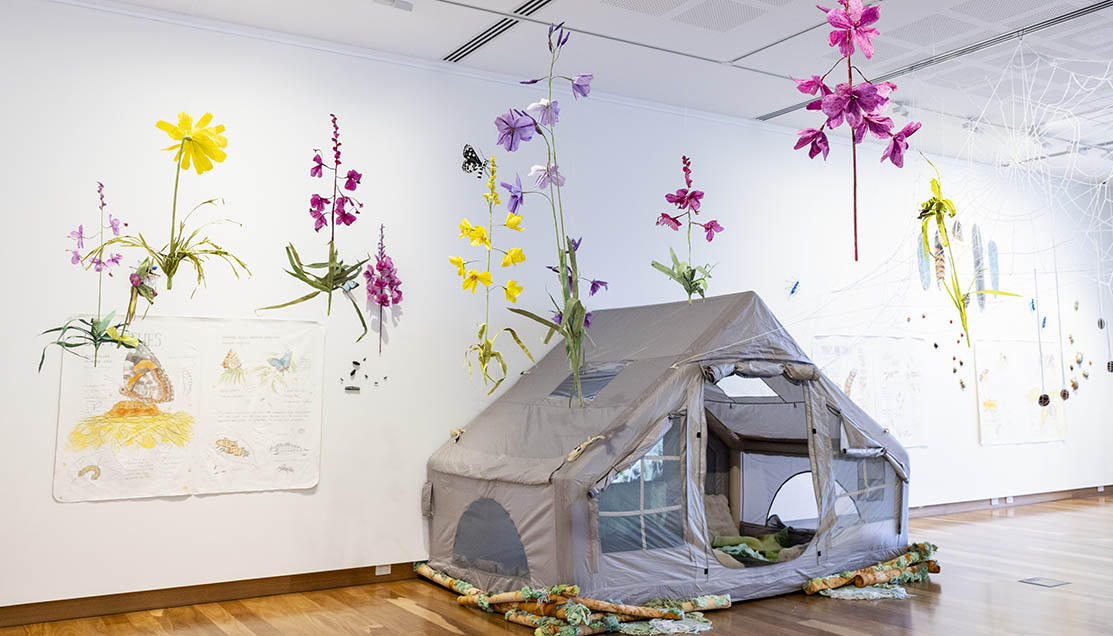
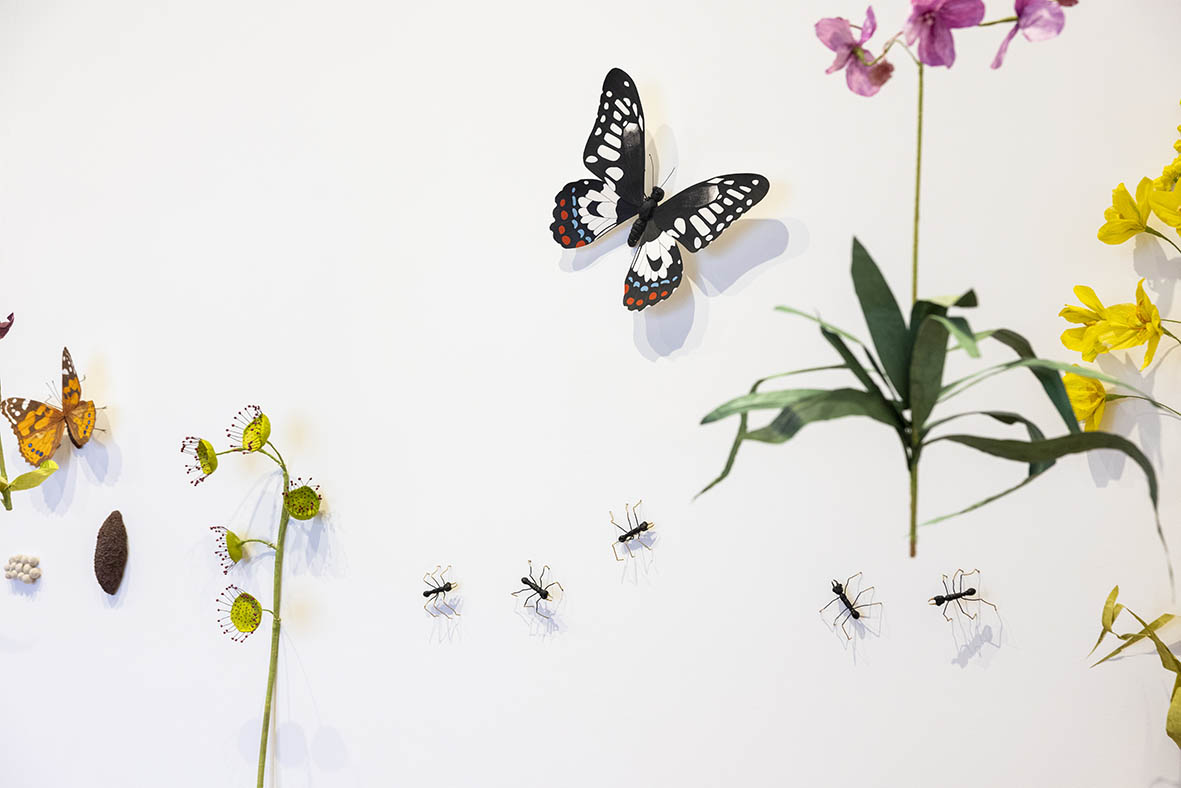
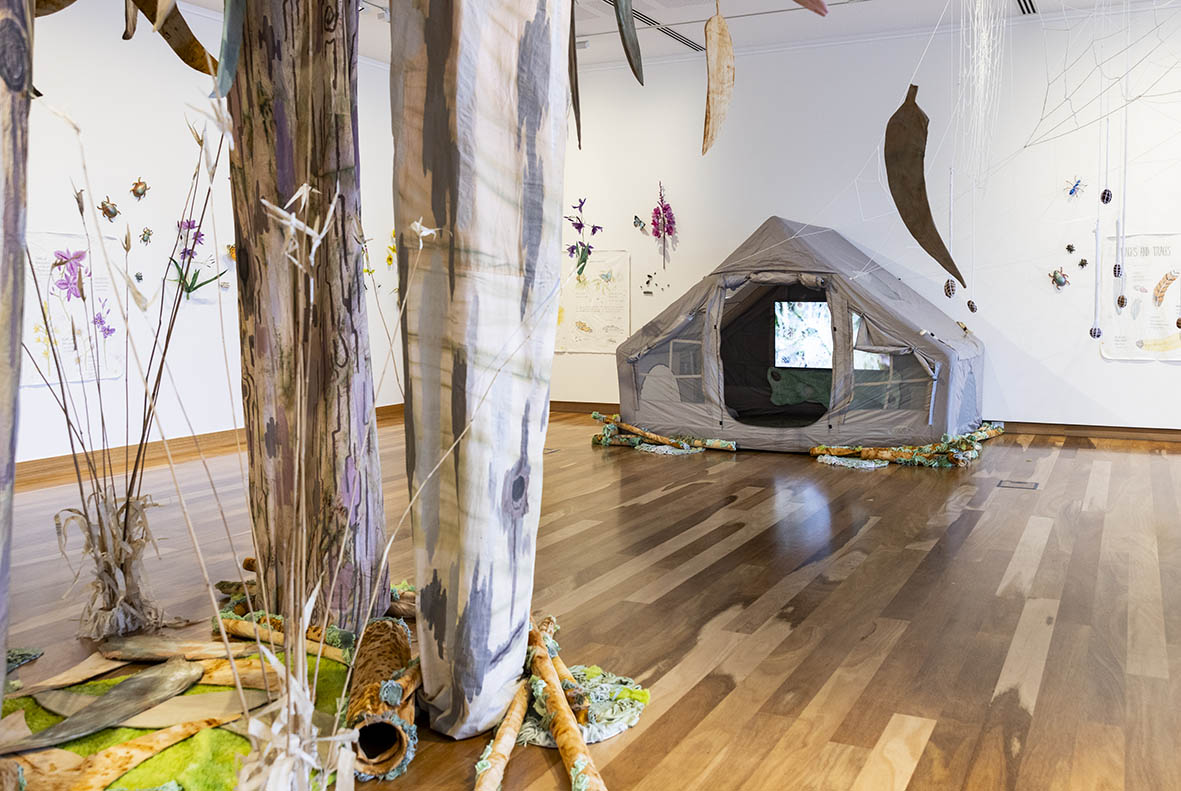
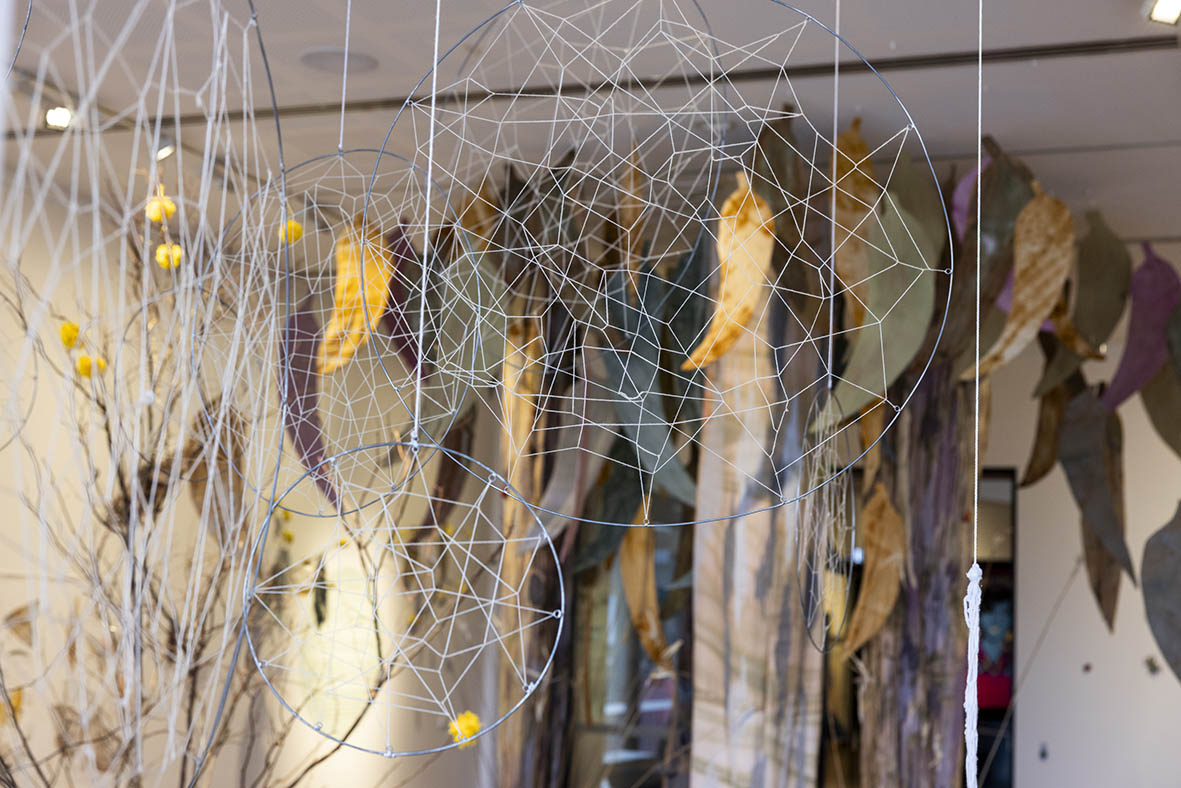
Understory extends the attentive practice of nature journaling into an immersive sculptural environment , that leaps off the page and visitors are invited to step inside and explore. The work grows from a practice of spending time in natural places, observing what is seen, heard and felt. It is a way of paying attention, building curiosity, and developing a deeper relationship with place and the things that live there. Through close observation, the small and easily missed forms on the forest floor are honoured as beautiful and important. The enlarged scale encourages looking closely to the interconnected stories within the Understory.
National Wool Museum
- National Wool Museum 2018 / White Night Ballarat 2019 / Photographs and video by Sarah Walker / Senior Curator Luke Keogh
SPIDERGOAT & THE INSECT ELECTRO
“It was eerie, absorbing, spectacular and inspiring all at the same time. Brilliant exhibition”. Ken Linnett (visitor)
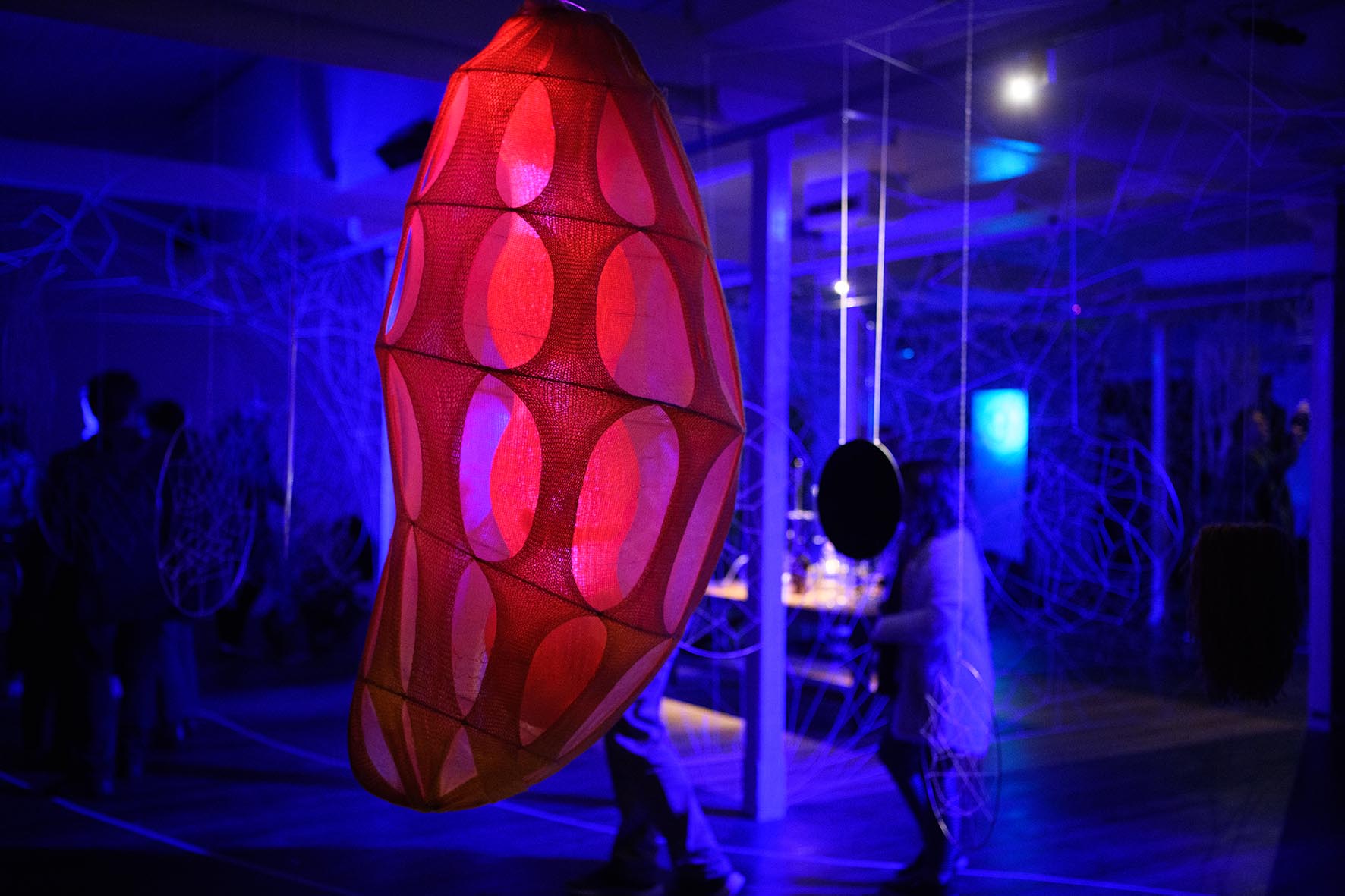
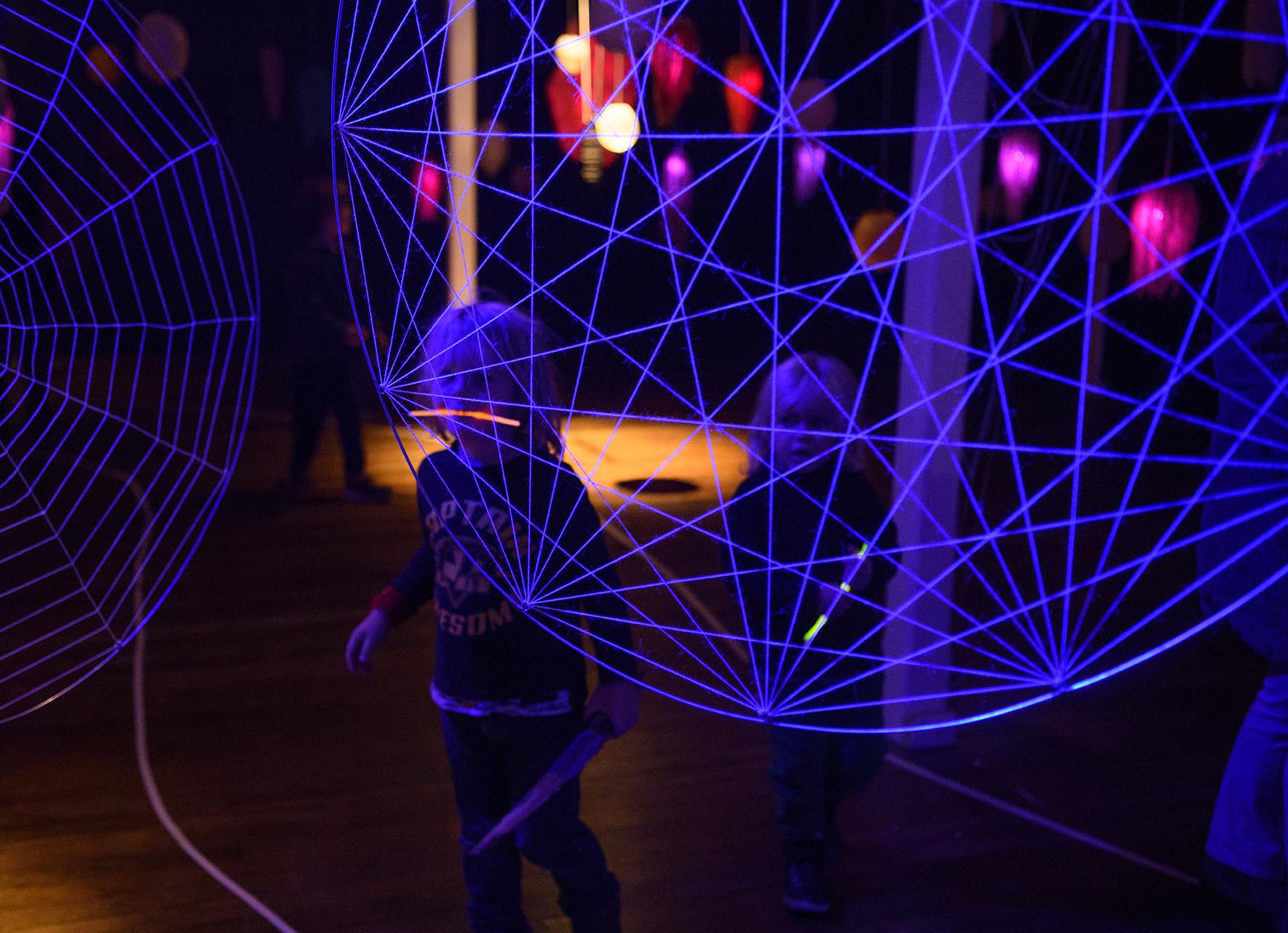
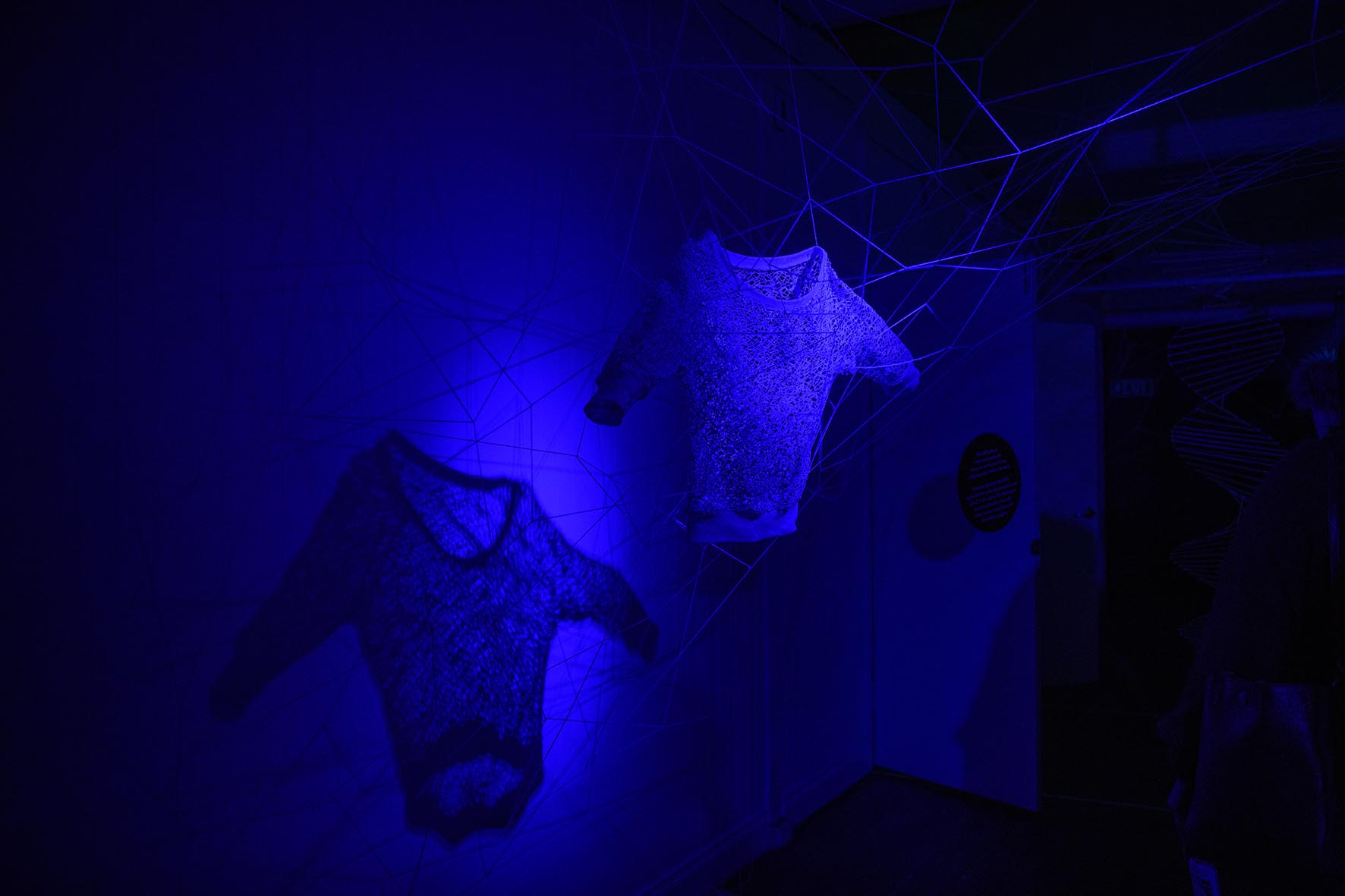
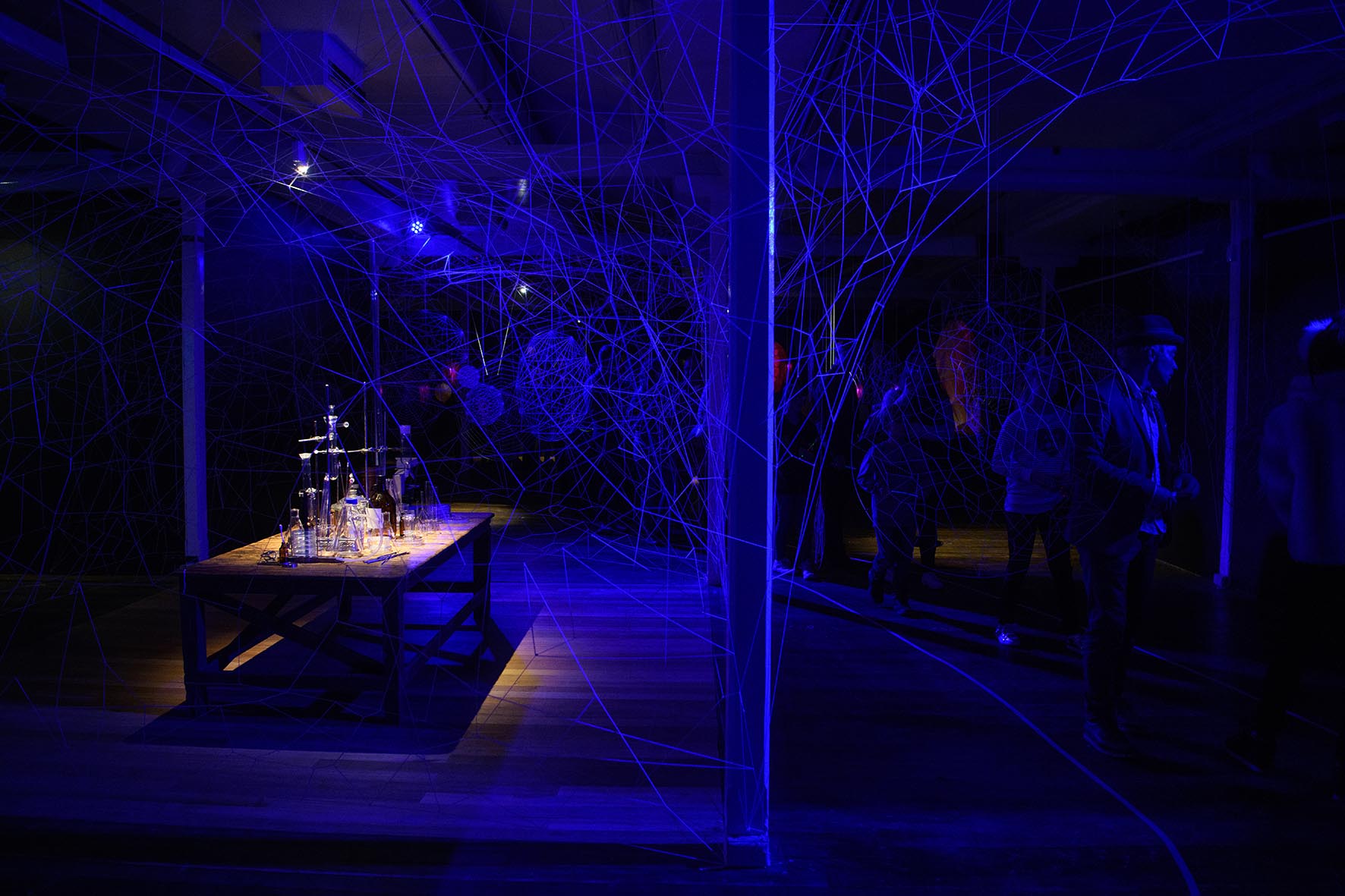
Spidergoat and the Insect Electro was created for the National Wool Museum and appeared at White Night Ballarat.
Light filled cocoons and gentle electro sounds led you into the installation where you unravelled a strange and thought provoking story about insect silk … told almost entirely with wool.
The quest to obtain or replicate the qualities of spider silk reveal unusual methods of research in science – from across the ages and into the contemporary transgenic era. What is revealed is hard to believe, but it is a true story! After many years spent marvelling at the artistry of spiders as weavers, this installation has given me the opportunity to delve into the qualities of spidersilk. As the strongest known natural fibre on the planet and many times stronger than steel, its elasticity and strength has been coveted by human industry and the sciences for centuries. It is with some kind of satisfaction that it remains somewhat elusive, like natures last secret. Up to this point human interference in natural selection has been as an editor, not a creator but the story revealed a new branch of the tree of life. That of the synthetic kingdom – the human made lifeforms on the cusp of introduction that are falling under the gaze of industrialised biology. As Senior Curator Luke Keogh pointed out, we are entering ‘brave new worlds’.
Some artwork from the installation is now part of the National Wool Museum Collection.
Here is a link to a video that illustrates the sound and light by Pierre Proske https://vimeo.com/278091360 / Video by Kathy Holowko
Synthesis
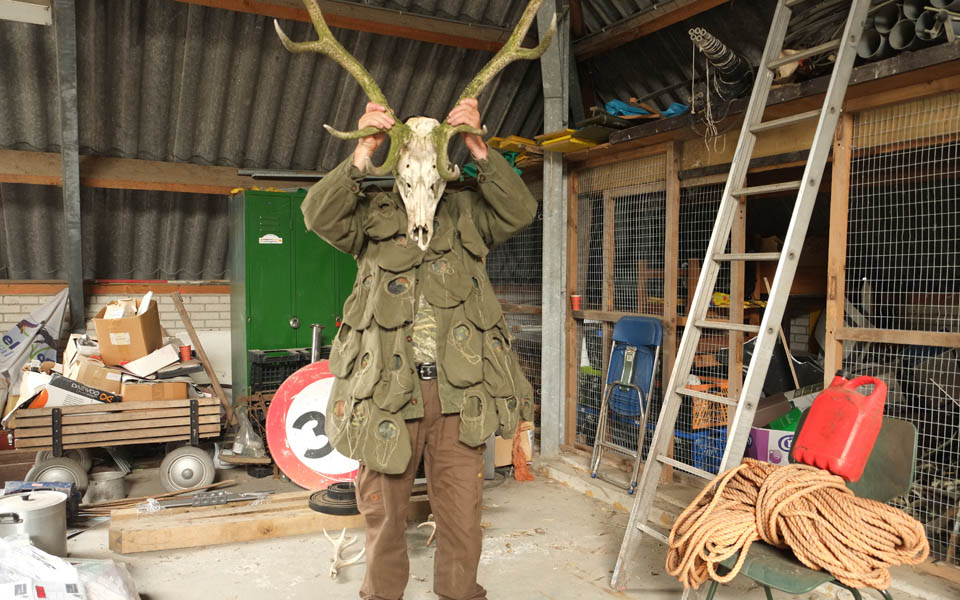
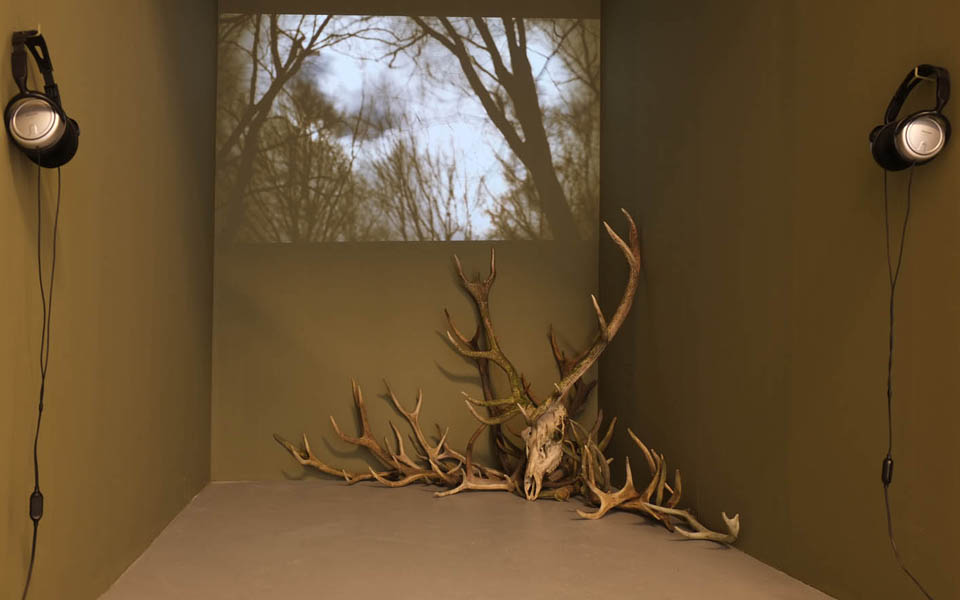
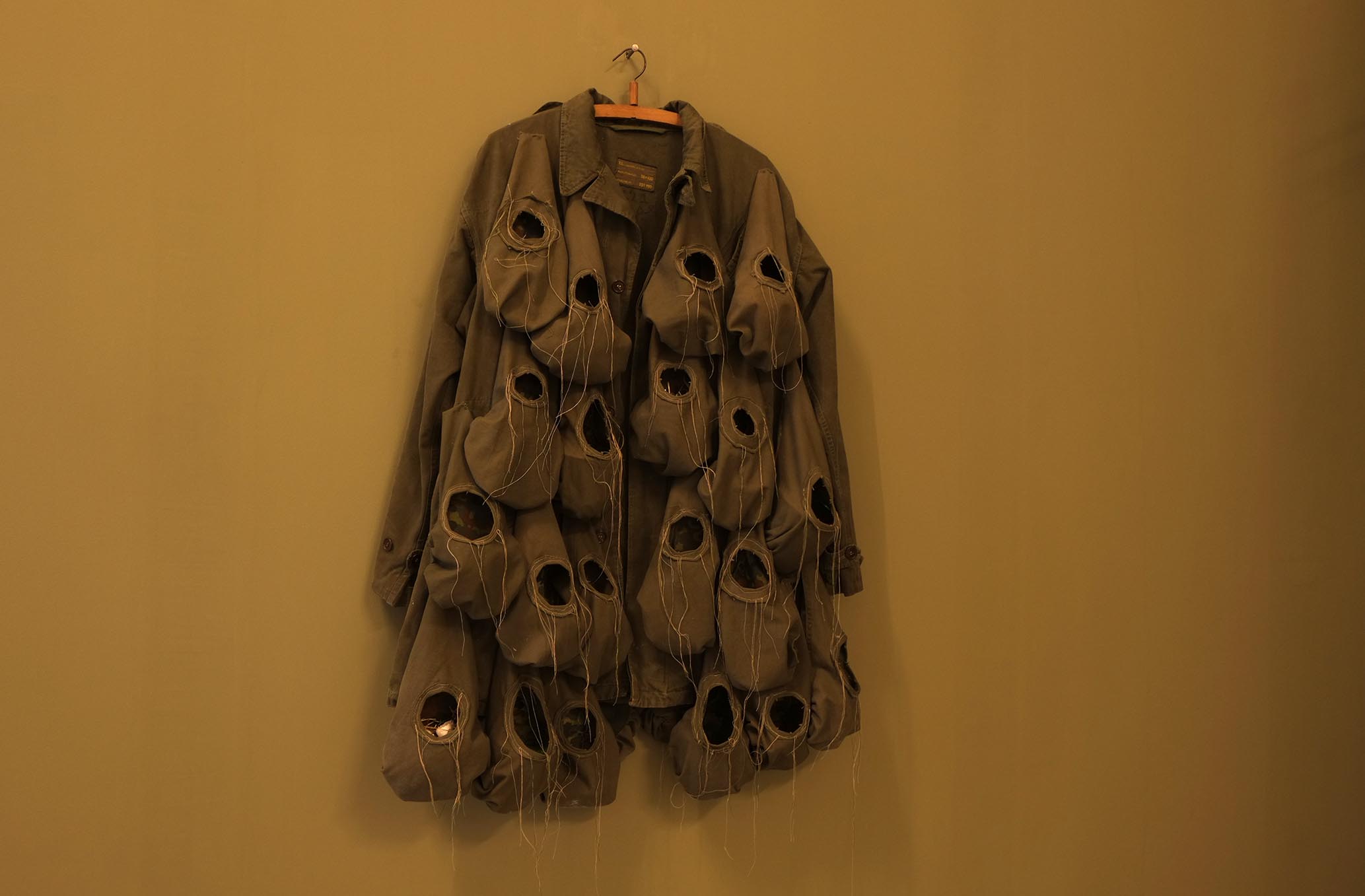
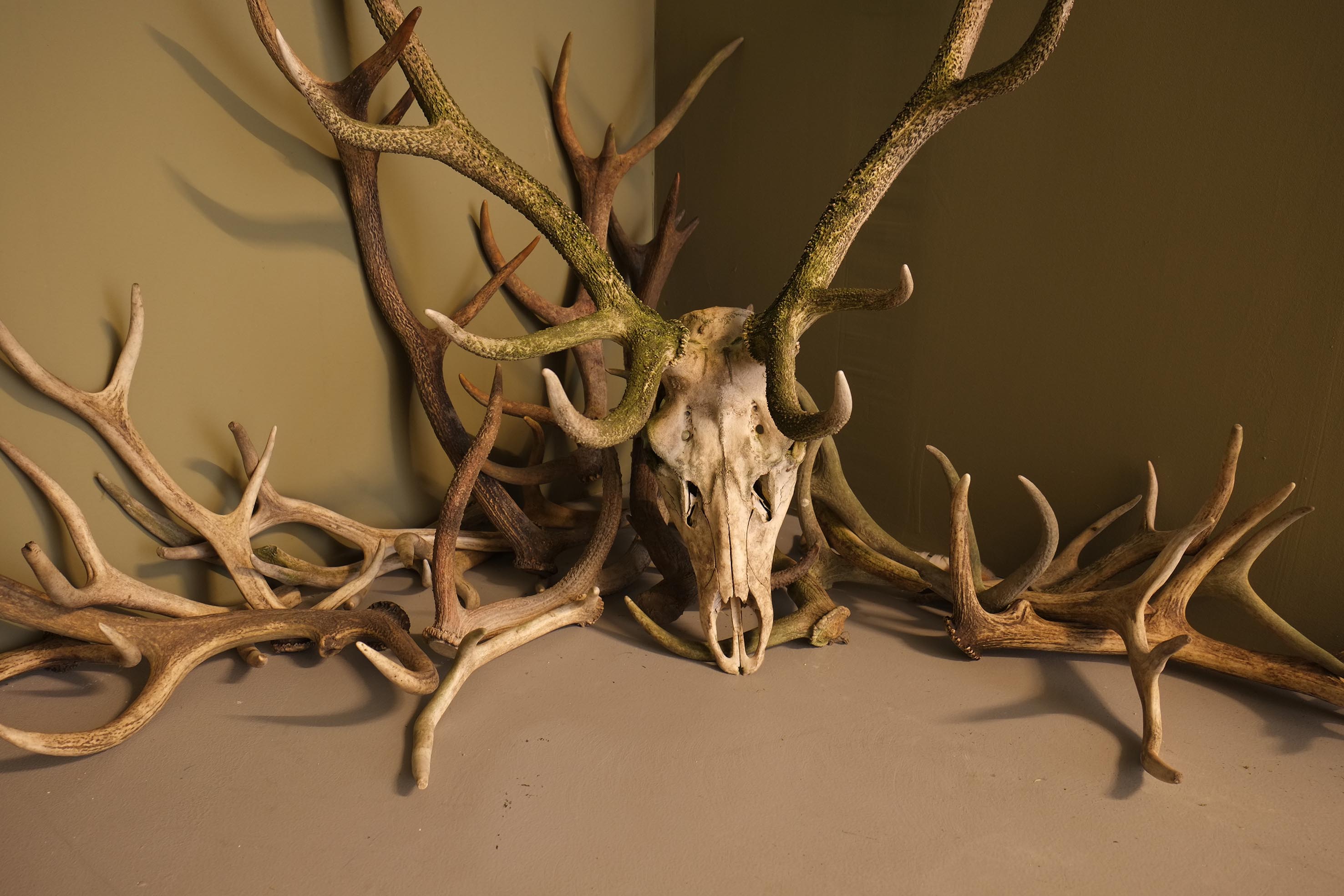
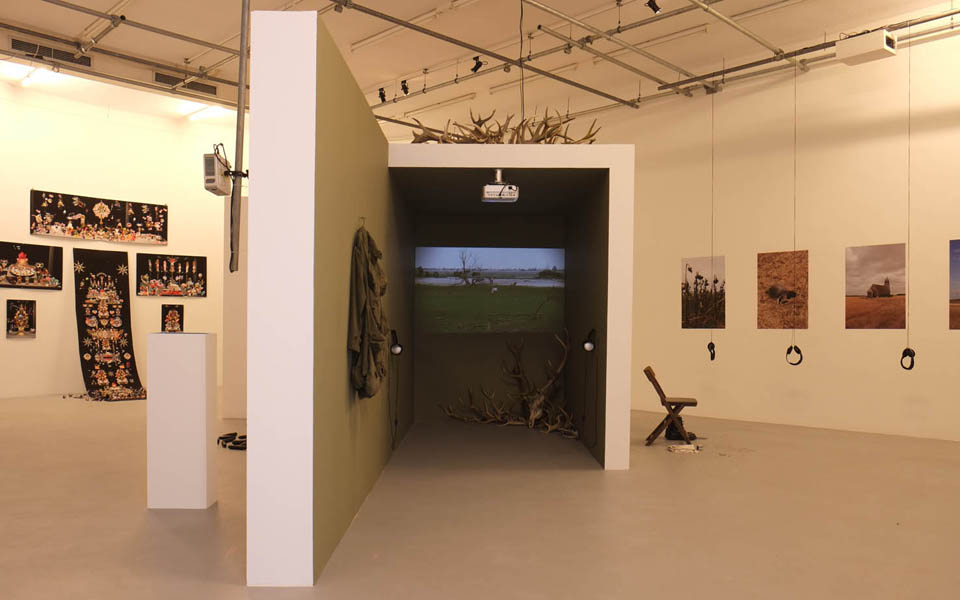
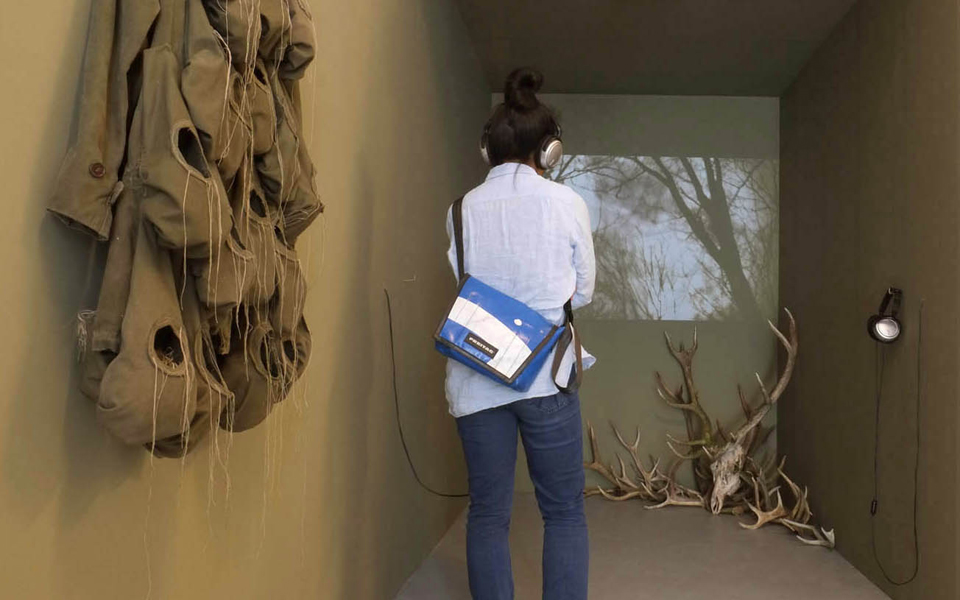
I explored this reserve with the help of a ranger who has since become ‘the eye of the wolf’, helping to regulate population growth by shooting weaker animals. This wetland now supports white tailed eagles not seen in The Netherlands in generations. I was able to go on safari through this reserve which looks far from a typical dutch landscape. The ideal was for the system to be self managed. This new hands-off approach resists the usual methods of neatening fallen trees or cleaning up animal bones which creates an eerie savana in parts. The offices were a visual fascination to me with taxidermy animals in meeting rooms or tucked amongst stacked chairs in hallways. The jeep garage is full of practical detritus and stacked deer antlers in amongst forgotten signs of the proposed and yet unrealised eco-corridor that would have seen a connection of wildlife corridors linking pocket habitats like this across the country.
Frequencies
Wild animals exist within our urban spaces, often unseen and unnoticed. They have their own borderlands and migrate within topographical maps made of animal habitats.
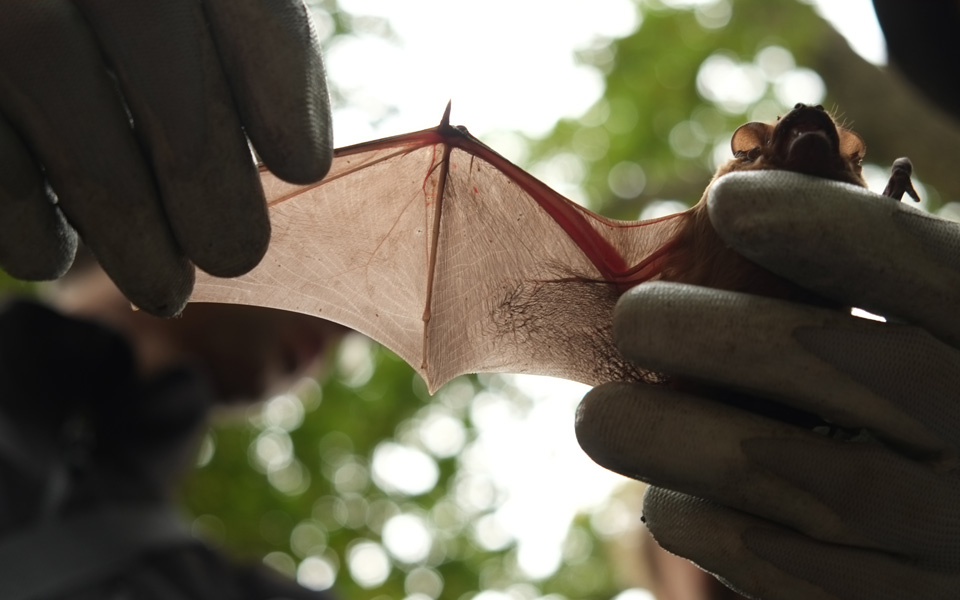
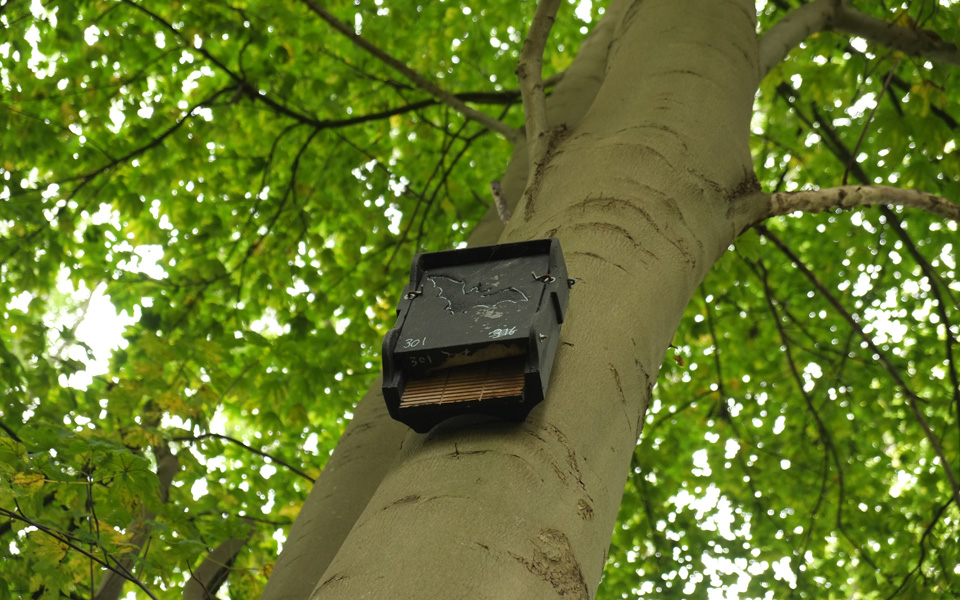
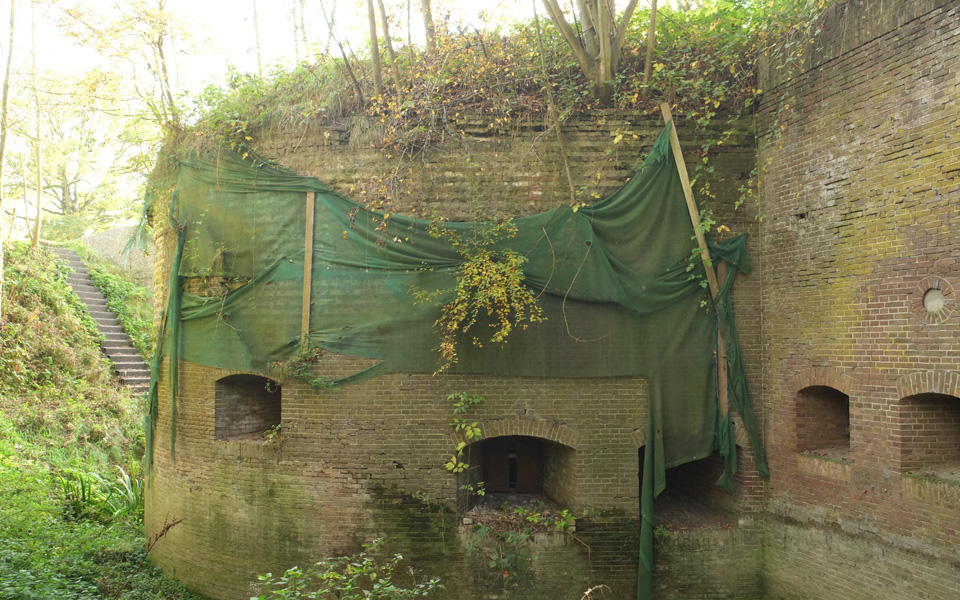
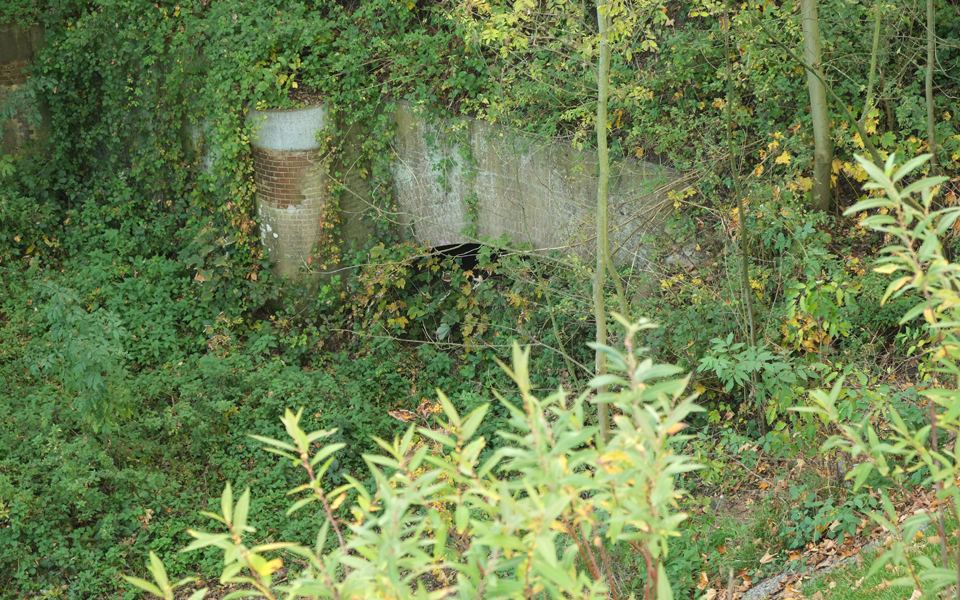
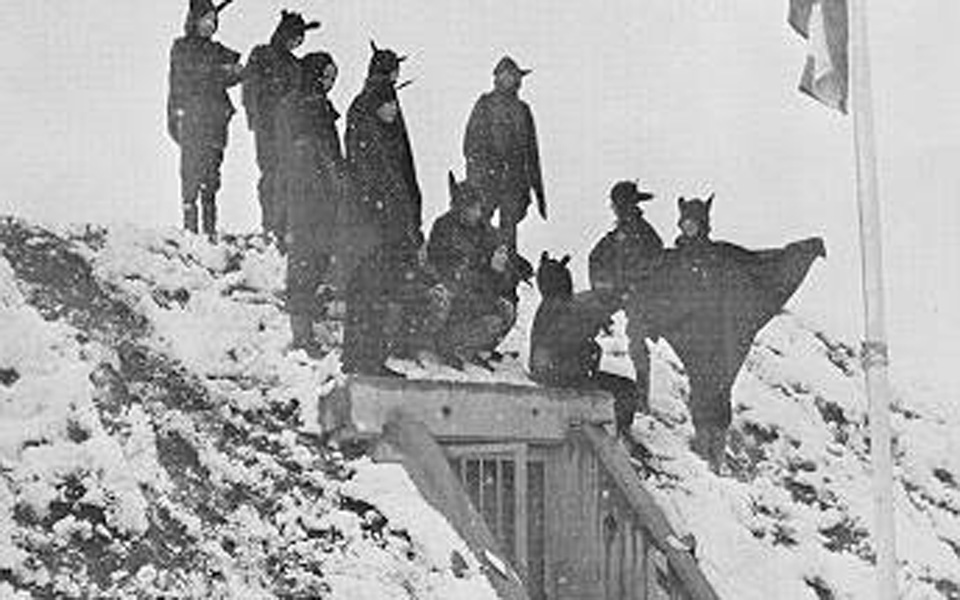
On a cold, snowy day in March 1985 in The Netherlands, an artificial bat “cave” was inaugurated by the town-mayor. A photograph records a group of school children dressed like bats at the official opening. The photograph was taken by Dr. Aldo M. Voute of the State University of Utrecht, the bat researcher that instigated the acknowledgement of these artificial hibernation sites. Many unused monuments of the military, such as forts and bunkers, are now protected micro bat roosts having evolved into nature reserves. Bats are now dependent on these synthesised urban habitats.
The micro bat fulfills its role in ecological systems by eating its own body weight in insects. Their population in Europe is declining but they have received legal protection. Since then, bat researchers have been carefully constructing and recording the use of different artificial bat housing, to identify successful bat box designs and roost sites.
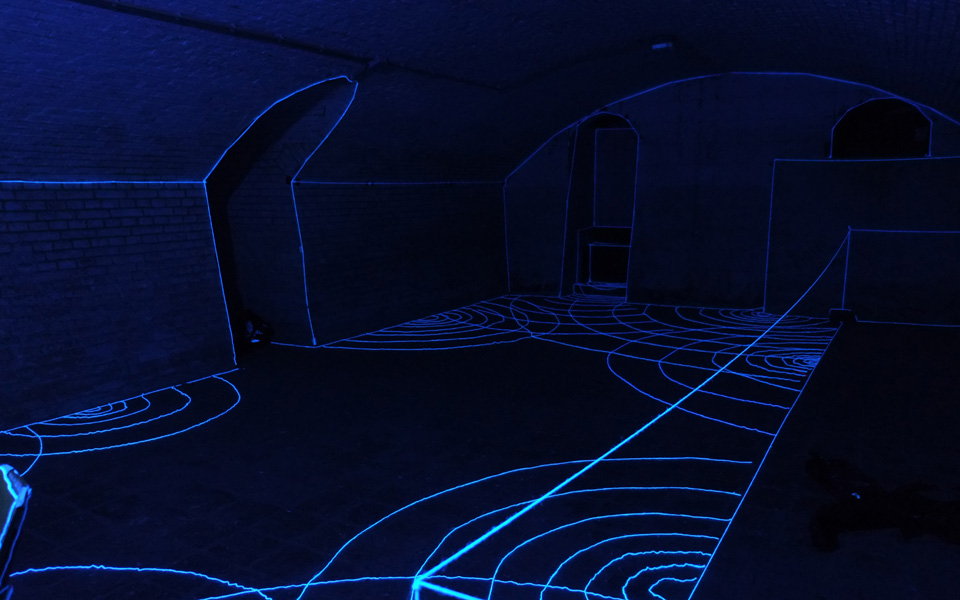
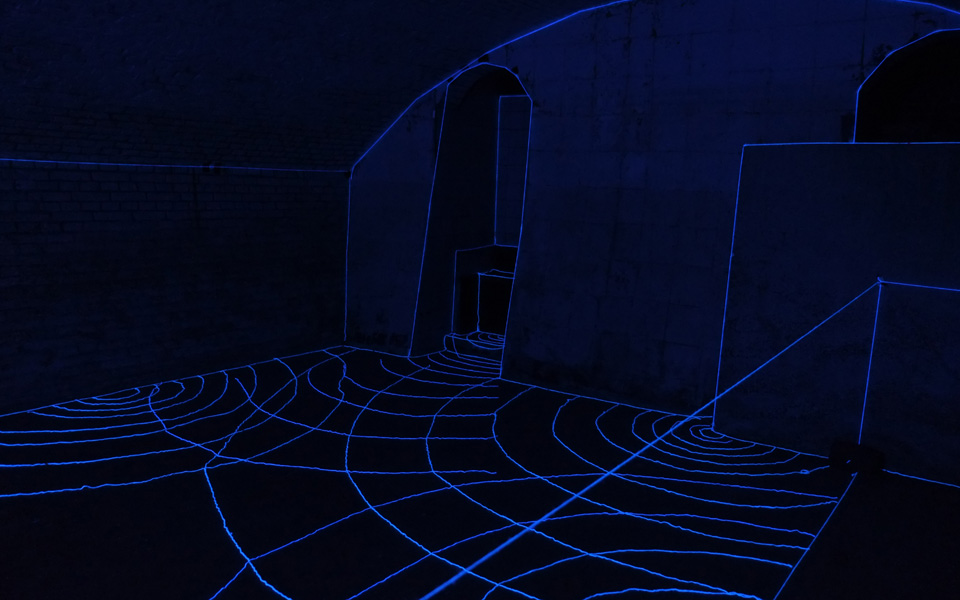
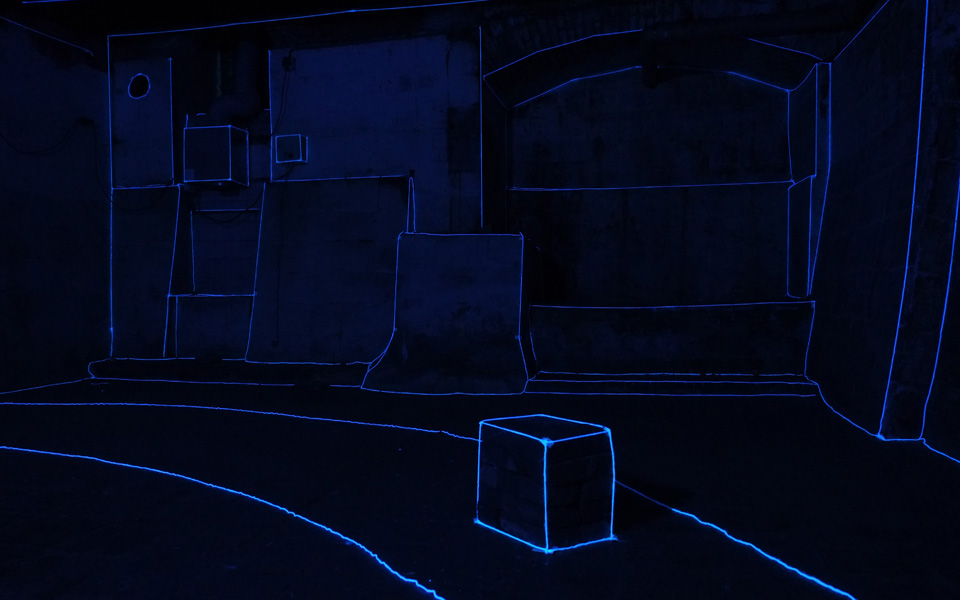
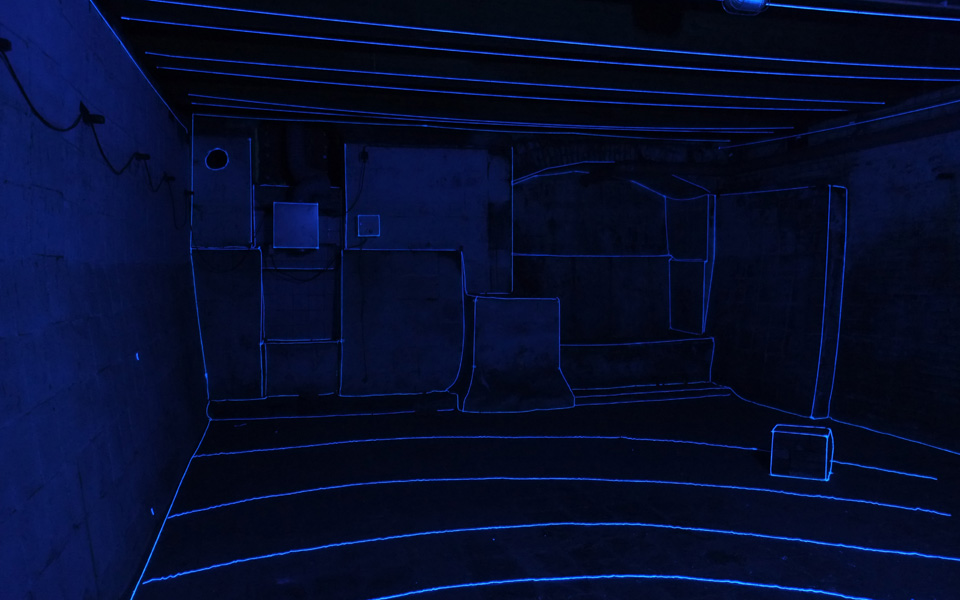
The nocturnal wanderings of these animals have created misplaced fears throughout cultural history.Their ability to see in the dark, at the time when we are most vulnerable, has placed these creatures of the night, into the category of horror in myth and story telling. It is scientifically acknowledged that humans share the ability to perceive objects in darkness through the same method as the bat. The blind, using echolocation, can experience images using sound waves that bounce off surfaces to convey spatial information, effectively seeing with their ears. It is a learned skill. A developed perception of the world. Philosopher Thomas Nagel posed the question “What Is It Like to Be a Bat?”. He concluded that where consciousness occurs in animal life that the experience is fully comparable in richness of detail to our own, but in the example presents sensory apparatus so different from ours that the problem is impossible. It is a proposition not expressible in a human language. We can hardly imagine the subjective character of their experience. But perhaps we can imagine … for a moment, seeing with our ears. This is the background to my work ‘Frequencies’ where I explored nonhuman perceptions in the darkened space of Fort Gagel, in Utrecht. Built in the early 1800’s as a military post, the underground cavern held a perfect darkness to install a work that visualised how a micro bat might hear an architectural space and formulate a spatial image of its environment. The sound waves are visualisations of how a bat sees with its ears.
Tricky Traps
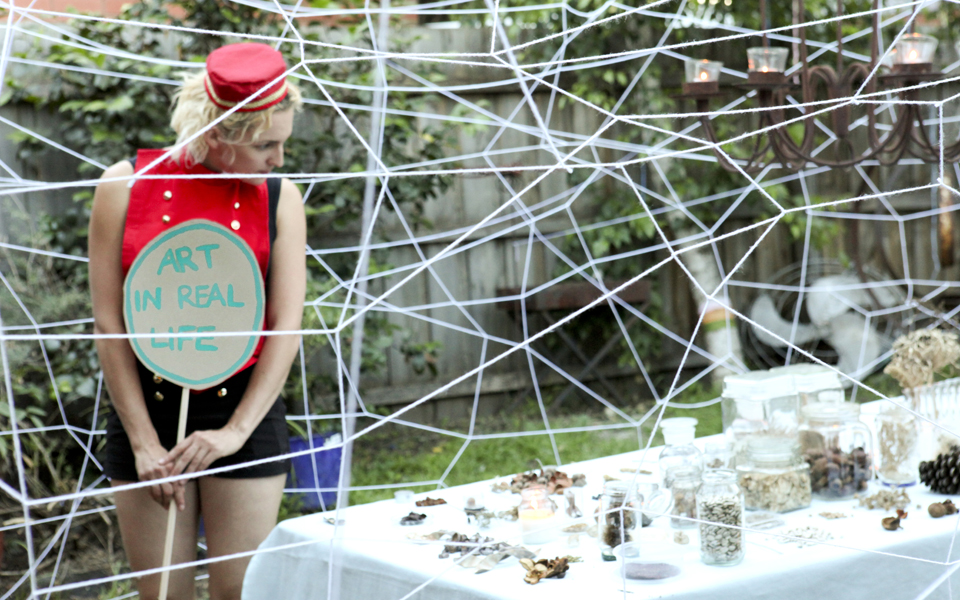
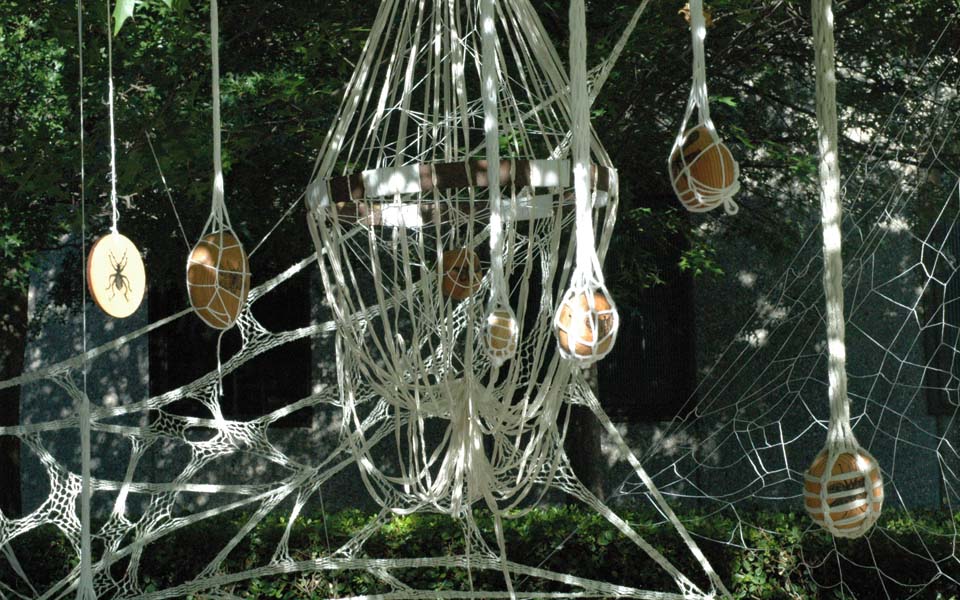
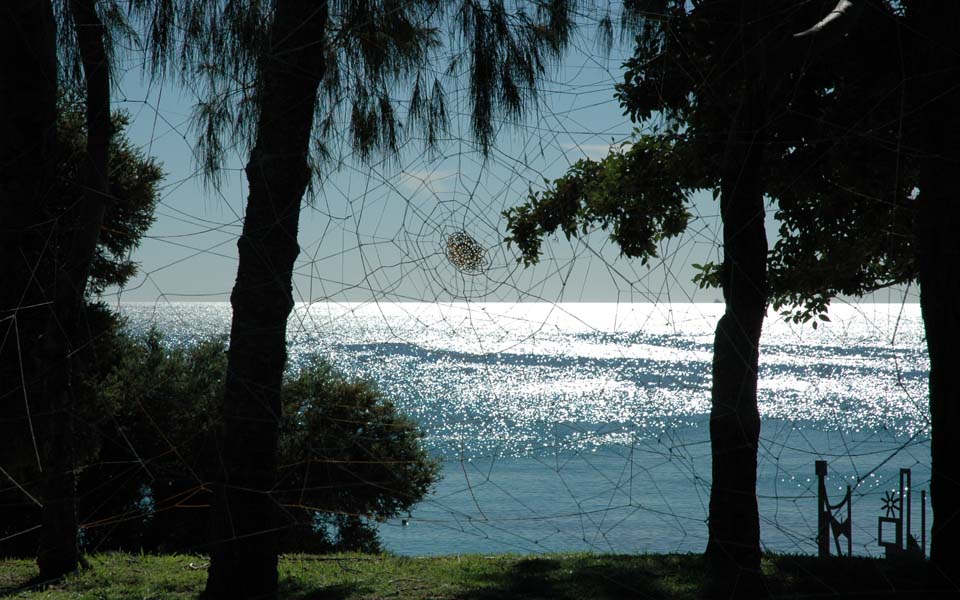
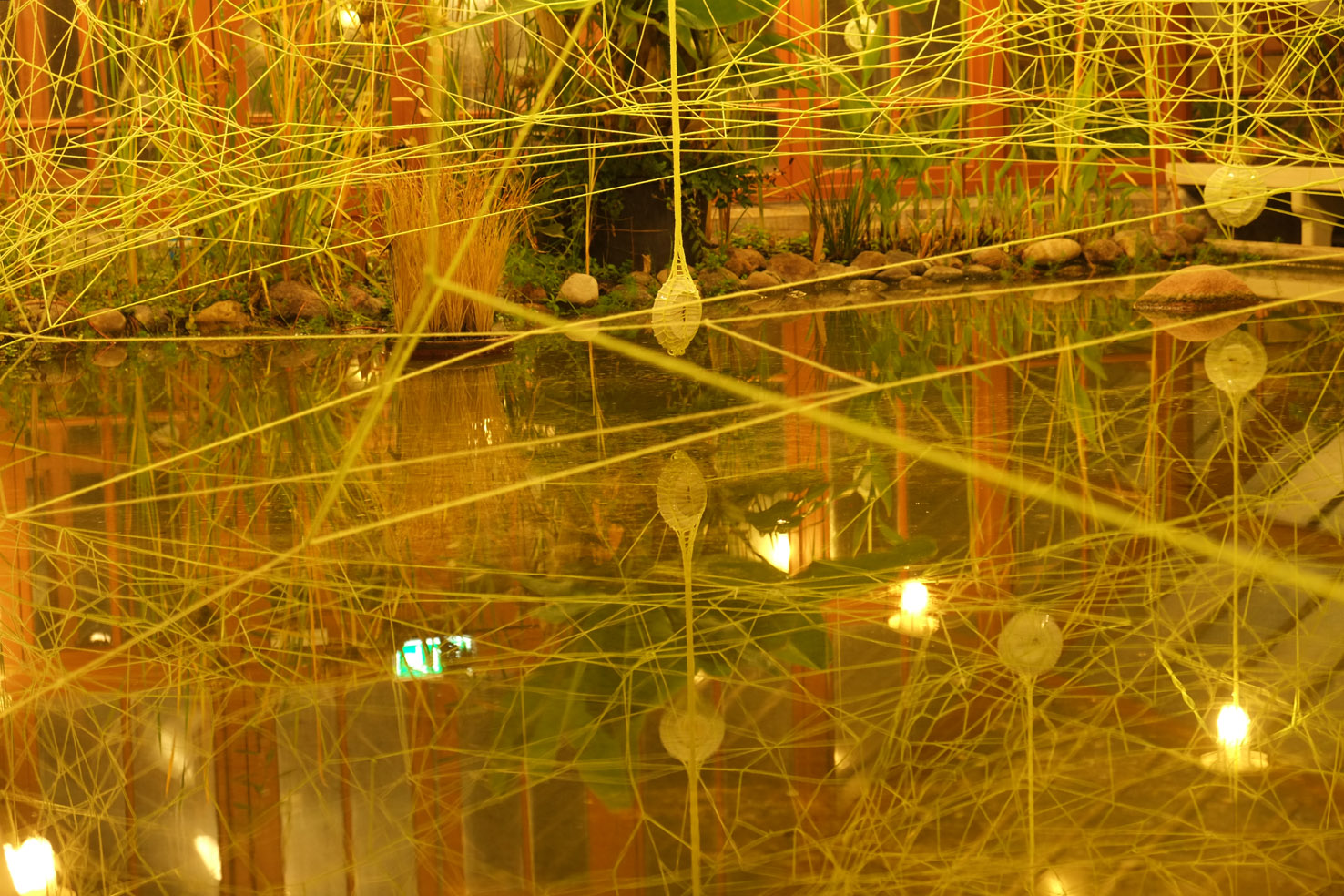
Animals are part of the fabric that makes up the world that we live in. Often it is only the smallest, useful or most adaptable animals that can remain within the urban environment. Spiders are able to inhabit the spaces that are inaccessible and often invisible to us, revealing themselves in the artistry of their webs. Giovanni Aloi asks us, if the uniqueness of art is a human prerogative? The spider may not be inspired by aesthetics or narrative ideas, but creativity is definitly present which is the universal originator of art. Is it only humans that can creatively interpret their environment or is that an anthropocentric view that needs challenging? Finding new perspectives from which to understand life may radically change who we are, where we are going and who we are going there with, for global warming, environmental decay and mass extinction are all clear indices of the wrongness of our approaches.